Moving house, relocating a business, or even just organising items during a renovation can feel overwhelming. The key to a seamless transition lies in methodical planning and a structured approach. This definitive uk moving checklist is engineered to guide you through every stage of the process, transforming a potentially chaotic experience into a manageable project. We have broken down the entire journey into a clear, timeline-based guide, starting from eight weeks before your move, leading up to the day itself, and settling in afterwards.
This guide provides more than just a list of tasks; it offers actionable advice, expert tips, and practical insights to make your move as efficient and stress-free as possible. Whether you are a homeowner preparing for a new chapter, a student moving between accommodations, or a small business owner relocating your premises, this comprehensive checklist ensures you won't miss a single crucial detail. From decluttering your space and organising packing supplies to notifying utility companies and managing legal paperwork, we cover every angle.
For homeowners, navigating the complexities of property transactions is a significant part of the move. While we cover the practical steps, ensuring you have a firm grasp on the legal documentation is vital; for instance, properly understanding property deeds can prevent significant delays and complications down the line. We'll also delve into how strategically using a secure self-storage facility can be a game-changer, offering the flexibility and space needed to manage your belongings effectively during this busy period. Let's get started on planning your smoothest move yet.
1. Declutter and Sort Your Belongings
The first, and arguably most important, step in any successful UK moving checklist is to systematically declutter your home. This process involves going through every item you own and deciding whether to keep, sell, donate, or discard it. It’s far more than a simple tidy-up; it’s a strategic move that directly reduces removal costs, simplifies the packing process, and sets the stage for a more organised start in your new home.
Starting this task 6-8 weeks before your move date prevents last-minute panic. A practical approach is the 'one-year rule': if you haven't used an item in the last 12 months, it's a strong candidate for removal. This process is also an ideal time to identify possessions that you need to keep but won't require immediately, such as seasonal decorations, sentimental items, or hobby equipment. These are perfect for placing into self-storage, keeping them safe and out of the way during the transition.
Actionable Decluttering Tips
- Categorise Your Items: Create four distinct piles or zones labelled: Keep, Sell, Donate, and Discard. This forces a decisive action for every single item.
- Schedule Sales and Donations: List items on platforms like Facebook Marketplace or Vinted well in advance. For donations, book a collection with a local charity shop or find your nearest drop-off point.
- Handle Electronics Responsibly: Unwanted gadgets and appliances require special attention. For guidance on environmentally friendly disposal, consider learning about recycling electronic equipment to ensure you comply with UK regulations.
- Plan for Storage: As you decide what to keep, use a tool like the MG Self Storage space calculator to estimate the unit size you'll need. This helps homeowners undergoing renovations, students storing items over the summer, or businesses archiving documents.
Key Insight: Decluttering isn't just about getting rid of things. It's an opportunity to intentionally design your future living space and decide what truly adds value to your life. For more detailed strategies, explore our guide on how to successfully downsize your home.
2. Book Your Self-Storage Unit Early
Securing a self-storage unit is a crucial logistical step in your UK moving checklist, providing a secure space for items you’ve decluttered but wish to keep. Booking this space well in advance of your move date removes a significant layer of stress and ensures you get the right unit for your needs. This is especially true during peak moving seasons (typically May to September) when demand for quality storage, like that offered by MG Self Storage in Exeter, is at its highest.
Booking early, ideally 4-6 weeks before you plan to start moving items, guarantees availability and gives you the flexibility to move non-essential belongings gradually. This de-stresses the final packing days and creates a clearer, safer environment in your home. It’s an essential strategy for homeowners bridging a gap between properties, businesses managing stock during a relocation, or students needing a safe haven for their possessions over the summer holidays.
Actionable Storage Booking Tips
- Book Larger Than You Think: It's a common mistake to underestimate how much space your belongings will occupy. Opting for a slightly larger unit provides valuable extra room for access and organisation.
- Use an Online Calculator: Before booking, use a precise tool like the MG Self Storage space calculator to get an accurate estimate of the unit size required. This prevents paying for unused space.
- Clarify Security and Access: When booking, confirm the facility's security measures, such as 24/7 CCTV surveillance and controlled access. Also, check the access hours to ensure they align with your moving schedule.
- Read the Small Print: Understand the contract terms, particularly regarding notice periods and cancellation policies. This provides clarity and prevents unexpected costs if your plans change.
Key Insight: Early booking transforms self-storage from a last-minute necessity into a strategic tool for an organised, phased move. It gives you control over the timeline and helps manage costs effectively. For a detailed breakdown of what to expect, explore our guide on how much self-storage costs in the UK.
3. Create a Detailed Moving Inventory
Once you've decided what to keep, the next critical task in your UK moving checklist is creating a detailed inventory. This is more than just a list; it’s a comprehensive record of your possessions, crucial for organisation, insurance, and peace of mind. A thorough inventory helps you track everything from boxes to furniture, ensuring nothing gets misplaced during transit or while in storage, and provides essential documentation should you ever need to make an insurance claim.
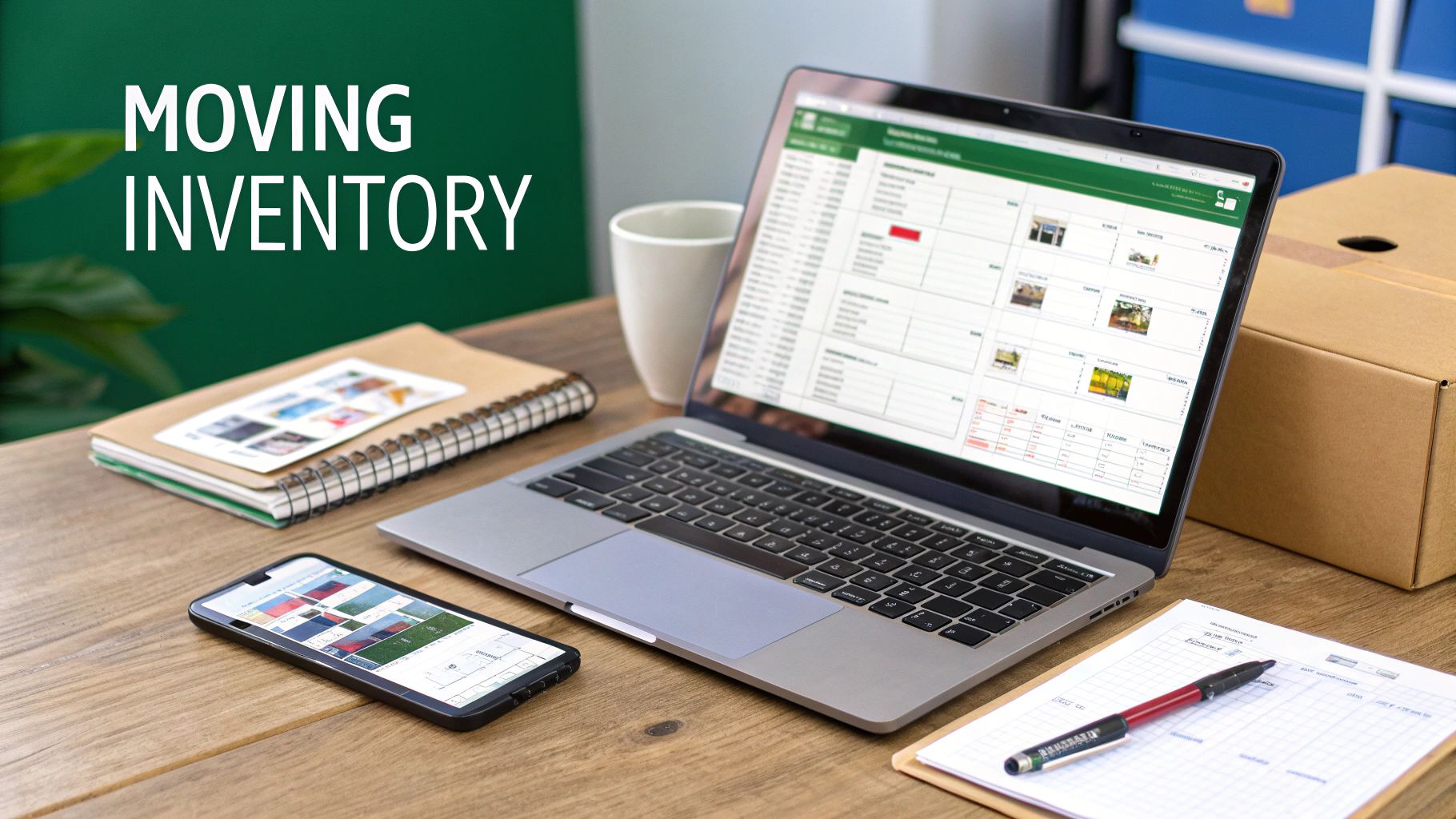
This process is particularly valuable for anyone using self-storage. For homeowners storing furniture during renovations, it provides a clear record of what’s been put away. Likewise, a business owner can efficiently catalogue stock and equipment, making it simple to retrieve specific items when needed. Starting your inventory as you declutter and pack makes the task manageable and ensures accuracy from the outset.
Actionable Inventory Tips
- Number Everything: Assign a unique number to every box and large item. Mark the number clearly on the box and record its contents in your inventory spreadsheet or app.
- Be Descriptive: Don't just write "kitchen stuff." Instead, list "Box 12: Dinner plates (12), wine glasses (8), cutlery set." For valuable items, include serial numbers, brands, and distinguishing features.
- Use Visuals: Take photos or a quick video of the contents of each box before sealing it. This provides an excellent visual reference and supports any potential insurance claims.
- Keep Multiple Copies: Create both a digital copy (stored in the cloud, like on Google Drive or Dropbox) and a physical paper copy. Keep the paper copy with you on moving day, not packed away in a box.
Key Insight: A moving inventory is your single source of truth during a chaotic time. It transforms the overwhelming task of tracking hundreds of items into a controlled, organised process, giving you complete oversight of your belongings at every stage of the move.
4. Arrange Appropriate Insurance Coverage
An often-overlooked yet critical component of any UK moving checklist is arranging the correct insurance. Whether you are moving directly to a new property or placing items into storage, standard home insurance policies frequently do not provide adequate cover for goods in transit or within a self-storage unit. Securing a dedicated insurance policy is a non-negotiable step to protect your possessions against unforeseen events like theft, fire, or accidental damage during the moving process.
This task should be addressed around 4-6 weeks before your moving date to allow sufficient time to compare policies and ensure cover starts the moment your belongings leave your home. It’s a crucial safeguard, particularly for those with high-value items. Homeowners insuring a lifetime of possessions during renovations, businesses protecting valuable stock, or individuals storing irreplaceable inherited collections all need the peace of mind that comes with comprehensive protection.
Actionable Insurance Tips
- Review Your Existing Policy: Check your current home insurance policy first. It may offer limited ‘goods in transit’ cover, but it’s unlikely to extend to items held in a self-storage facility.
- Compare Specialist Providers: Obtain quotes from multiple specialist moving and storage insurance providers like Direct Line or Move Insurance. Carefully compare coverage limits, excess amounts, and policy exclusions.
- Declare Value Accurately: Create an accurate inventory of the items you are moving and storing, declaring their true replacement value. Under-insuring can lead to claim rejections or partial payouts.
- Document High-Value Items: For expensive electronics, antiques, or jewellery, take clear photographs from multiple angles. Keep these photos with your detailed inventory and insurance documents as evidence for any potential claim.
- Confirm Security Requirements: Insurers often provide better premiums for items stored in facilities with robust security. Features like MG Self Storage’s CCTV surveillance and secure gated entry can help meet insurer requirements and may lower your costs.
Key Insight: Insurance is not just a box-ticking exercise; it’s a vital financial safety net. Ensure your policy is active from the day your items are first moved and covers the entire period they are in transit and, if applicable, in storage.
5. Organise Your Packing Materials and Supplies
An essential part of any comprehensive UK moving checklist is gathering high-quality packing materials well in advance. Having the right supplies, from sturdy boxes and strong tape to protective bubble wrap, is crucial for safeguarding your possessions during transit or while in storage. This step prevents the last-minute stress of sourcing materials and ensures that everything from fragile glassware to bulky electronics is packed securely and efficiently.
Starting to collect your supplies 6-8 weeks before the move can significantly reduce costs. Many UK supermarkets and local retailers are happy to give away their used-but-sturdy delivery boxes for free. For specialised or professional-grade items, MG Self Storage offers the convenience of an on-site box shop, providing everything you need in one place. Using proper materials not only prevents damage but also helps you maximise space in the removal van and your storage unit.

Actionable Packing Supply Tips
- Source Free Boxes Early: Start collecting free cardboard boxes from local supermarkets, off-licences, or large retailers several weeks before your move. Shops that stock fragile goods often have the best-quality boxes.
- Invest in Quality Materials: Don't compromise on essentials like strong packing tape and bubble wrap, especially for breakables. For convenience and guaranteed quality, visit the MG Self Storage on-site box shop for professional-grade supplies.
- Systemise Your Labelling: Label every box with its contents and the destination room in your new home. Using a colour-coding system, such as different coloured tape for each room, makes unpacking far more efficient.
- Pack Smartly: Place heavy items like books in small boxes to keep them manageable, and use larger boxes for light, bulky items such as duvets and cushions. If you have them, use the original boxes for electronics, as they offer the best protection for long-term storage.
Key Insight: The quality of your packing materials directly impacts the safety of your belongings. For homeowners protecting furniture during a renovation or small business owners storing valuable stock, investing in the right supplies provides peace of mind and prevents costly damage.
6. Coordinate Transportation and Moving Logistics
Planning the physical logistics of your move is a critical part of any UK moving checklist, ensuring your possessions travel safely to your new home or a storage unit. This step involves deciding between hiring professional removal companies, renting a van for a DIY move, or coordinating help from friends and family. Effective transportation planning prevents damage, avoids costly delays, and streamlines the entire moving day process.
This task should be actioned around 6-8 weeks before your move, especially during peak seasons like summer or bank holidays when demand for services is high. Carefully considering your route, vehicle access, and any special handling requirements for large or fragile items is key. For those moving items into storage, coordinating with the facility is crucial; for example, MG Self Storage offers 24/7 access, which provides excellent flexibility for various moving schedules, from weekday professional moves to weekend DIY efforts.
Actionable Logistics Tips
- Gather Multiple Quotes: Obtain at least 3-5 written quotes from reputable, British Association of Removers (BAR) accredited companies to compare services and pricing.
- Book Well in Advance: Secure your chosen removal company or van hire 6-8 weeks prior to your move date to avoid disappointment and potentially higher last-minute costs.
- Consider Off-Peak Moving: If your schedule allows, booking your move for a weekday can often result in lower rates from removal firms compared to popular weekend slots.
- Verify Van Hire Details: If you opt for a DIY move, carefully check the van rental agreement for insurance coverage, mileage limits, and breakdown assistance policies.
- Plan Your Route and Access: Confirm the best route to your new property or storage facility, considering potential vehicle size restrictions. Check access details like gate codes, lift availability, and designated parking at the destination.
- Document and Communicate: Take photos of valuable items before they are loaded as a record of their condition. Clearly communicate any special handling needs for fragile or heavy items to your movers.
Key Insight: Your moving day transport is the logistical backbone of the entire operation. Meticulous planning here doesn't just move boxes; it protects your belongings, saves you money, and removes one of the biggest sources of stress from the process.
7. Prepare Items for Storage – Cleaning and Protection
An often-overlooked yet critical part of any UK moving checklist is preparing your possessions for storage. This step goes beyond simply boxing items; it involves meticulous cleaning and protection to ensure they remain in perfect condition while stored. Dust, dirt, and trapped moisture are the primary causes of deterioration, leading to mould, mildew, pest infestations, and unpleasant odours. Proper preparation is your insurance policy against damage.
Taking the time to clean and protect your belongings 2-3 days before they enter storage is a non-negotiable task. This allows ample time for items, especially textiles and furniture, to dry completely. While MG Self Storage units are modern and condensation-proofed to minimise moisture-related risks, starting with clean, dry, and well-wrapped items is the best defence. This proactive measure preserves the value and extends the lifespan of your possessions, whether it's a student's winter wardrobe or a homeowner's antique furniture.
Actionable Storage Preparation Tips
- Clean and Dry Thoroughly: Clean all items using appropriate products for their material. Ensure furniture, appliances, and electronics are completely dry before wrapping or storing to prevent mildew and electrical damage.
- Protect Furniture and Fragiles: Wrap large items like sofas and tables in professional-grade moving blankets or furniture pads. Use bubble wrap for delicate items and fill gaps in boxes with packing paper to prevent movement.
- Maximise Textile Longevity: Use vacuum-sealed bags for clothing, bedding, and curtains. This not only saves a significant amount of space but also protects them from dust, moisture, and pests.
- Encourage Air Circulation: When possible, store items on pallets or shelving to keep them off the floor. Leave the doors of wardrobes, fridges (after a thorough clean), and cabinets slightly ajar to prevent musty smells and moisture build-up.
Key Insight: Preparing items for storage is about preservation, not just placement. Investing a few hours in cleaning and wrapping protects your belongings from long-term damage, ensuring they come out of storage in the same condition they went in.
8. Implement Strategic Packing and Storage Unit Organisation
Once you've decided which items are destined for storage, the next step in an effective UK moving checklist is to pack them with a clear strategy. This isn't just about fitting everything in; it's about organising your storage unit to maximise space, protect your belongings, and ensure you can easily access items without having to unload the entire space. A well-organised unit saves time, prevents damage, and makes the whole process far less stressful, whether you're a homeowner storing furniture during renovations or a business managing stock.
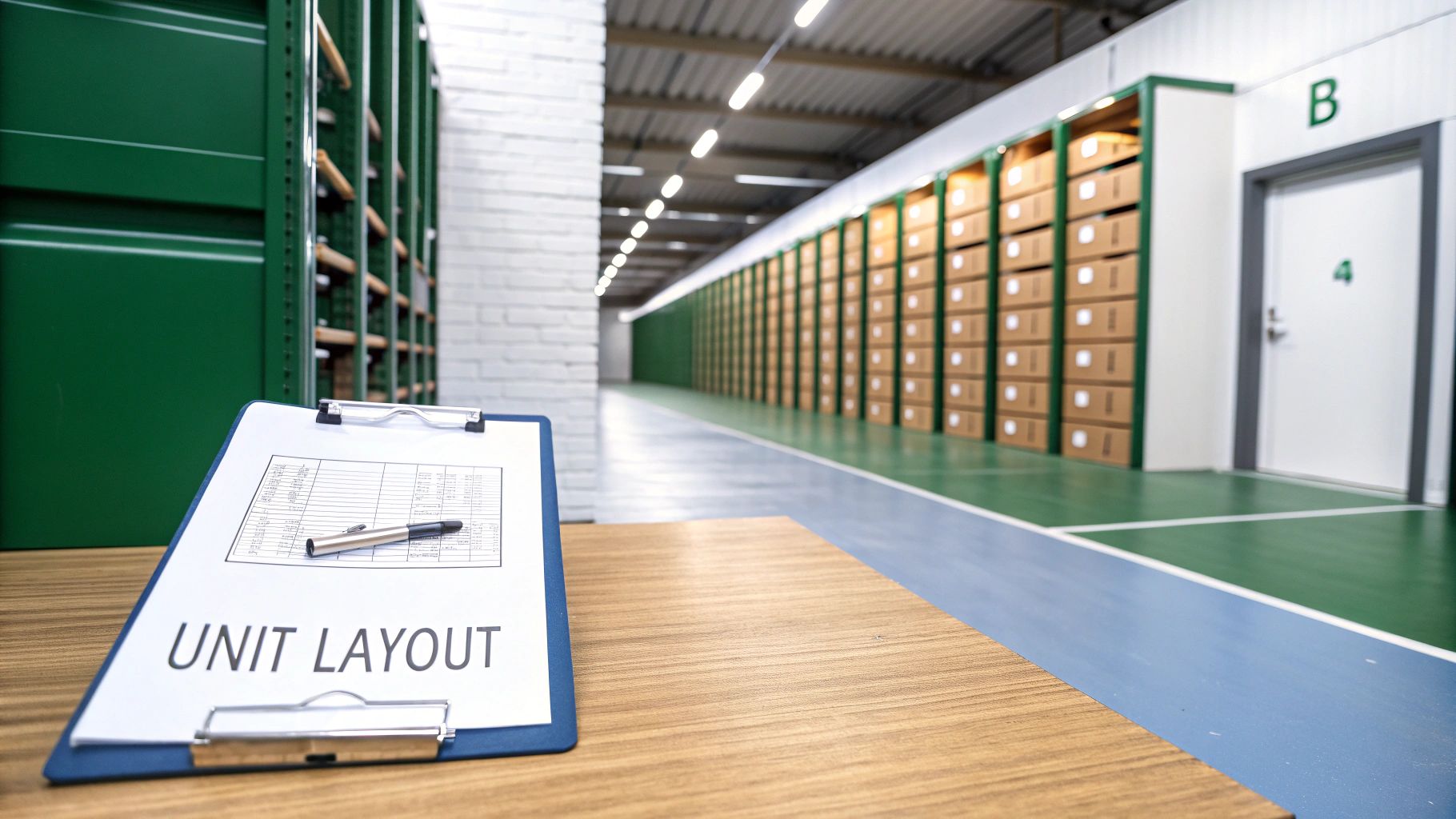
This process involves more than just stacking boxes. It requires planning how items will be placed based on weight, fragility, and how often you'll need them. For example, seasonal items or archived business documents can be placed at the back, while you should keep tools or essential files near the entrance. Creating a central aisle is crucial, as it allows you to walk through the unit and retrieve things safely and efficiently, which is particularly vital in smaller units where every square foot counts.
Actionable Organisation Tips
- Create a Unit Map: Before you move anything in, sketch a simple map of the unit layout. Plan where large furniture will go and how boxes will be stacked.
- Label and Inventory: Clearly label every box on multiple sides with its contents and the destination room. Cross-reference this with a detailed inventory list for quick identification.
- Prioritise Access: Place items you might need to access soonest, such as tools or important documents, right at the front of the unit for easy retrieval.
- Stack Safely: Always place heavier, sturdier boxes at the bottom and lighter, more fragile ones on top to prevent crushing and damage.
- Maximise Vertical Space: Use freestanding shelving units to take advantage of the unit's height, keeping boxes organised and off the floor.
Key Insight: Treating your storage unit like a library, not a cupboard, is the key to success. Proper organisation with clear aisles, a logical layout, and a detailed map transforms it from a cluttered box into a functional and accessible extension of your home or business. For more detailed instructions, see our expert advice on how to pack your storage unit: a step-by-step guide.
9. Establish Access and Retrieval Procedures for Storage Unit
Once your items are securely in a storage unit, the next crucial step in your UK moving checklist is to establish clear access and retrieval procedures. This isn't just about knowing the gate code; it’s a proactive plan for how you will retrieve your belongings efficiently and safely, without disrupting the organised system you created. A well-defined procedure saves time, prevents stress, and ensures you can access what you need, exactly when you need it.
This planning is vital for maintaining order, especially for long-term storage or frequent access scenarios. Homeowners might need to retrieve furniture during a phased renovation, while a business owner may require daily access to stock. Understanding the facility's hours, security protocols, and your own inventory system is key. Although MG Self Storage offers convenient 24/7 access, planning your visits ensures you can locate and retrieve items swiftly, turning your storage unit into a functional and accessible extension of your home or business.
Actionable Access & Retrieval Tips
- Secure Your Access Details: Keep your facility access code and unit key in a secure but memorable place. Avoid sharing these details to maintain the security of your belongings.
- Map Your Unit: Always keep your inventory list and a simple map or photograph of your unit's layout on your phone or in a safe place at home. This makes locating specific boxes quick and easy.
- Plan Your Visits: For non-urgent retrievals, try to plan your visit during off-peak hours to avoid congestion. If you need to retrieve a large or bulky item, inform the facility management in advance if required.
- Use 24/7 Access Strategically: For business owners needing to restock after hours or homeowners with unpredictable schedules, the 24/7 access at MG Self Storage is a significant advantage. Plan to use this flexibility to fit your specific needs without being constrained by traditional opening times.
Key Insight: Treating your storage unit with the same organisational respect as your home is crucial. A clear retrieval plan transforms it from a simple box of stored items into a dynamic, manageable resource that supports your move or business operations.
10. Plan for Long-Term Storage Maintenance and Reviews
For items destined for storage beyond a few months, a crucial step in your UK moving checklist is to establish a proactive maintenance and review plan. This isn't about simply locking a unit and forgetting about it; it’s a strategic approach to protect your possessions and ensure your storage solution remains cost-effective. Regular inspections prevent issues like moisture damage, pests, or deterioration from becoming serious problems, safeguarding the value of your stored goods.
This forward-thinking process is essential for anyone facing an open-ended storage timeline, such as homeowners during extensive renovations, businesses managing fluctuating stock levels, or individuals storing inherited items indefinitely. By scheduling periodic visits and assessments, you can adapt to changing needs, potentially downsizing your unit or retrieving items that are no longer required. It transforms storage from a passive expense into a managed asset, giving you complete peace of mind.
Actionable Storage Maintenance Tips
- Schedule Regular Inspections: Set a calendar reminder to visit your unit quarterly. During these visits, check for any signs of damp, unusual odours, or pests, and ensure your protective coverings are still secure.
- Update Your Inventory: Periodically review your inventory list. Ask yourself if the items are still needed or if their value justifies the ongoing storage cost. This prevents paying to store belongings you could sell or donate.
- Maintain Item Condition: For long-term furniture storage, ensure dust covers are intact. For sensitive items, consider refreshing moisture-absorbing products like silica gel every few months to maintain a stable environment.
- Communicate with Management: If you notice any issues with the unit or the facility, report them to the storage management team immediately. A well-maintained facility is a partnership between the provider and the user.
Key Insight: Long-term storage requires active management, not passive placement. A scheduled review process ensures your belongings are preserved, your costs are controlled, and your storage unit serves its intended purpose without becoming a forgotten liability.
10-Point UK Moving Checklist Comparison
| Item | Implementation complexity | Resource requirements | Expected outcomes | Ideal use cases | Key advantages | Main drawbacks |
|---|---|---|---|---|---|---|
| Declutter and Sort Your Belongings | Medium — systematic, room-by-room process | Time, decision-making effort, temporary staging space, disposal/selling channels | Reduced moving volume and cost; clearer packing list; items identified for storage | Pre-move downsizing, renovations, students | Lowers costs, speeds packing/unpacking, opportunity to sell or donate | Time-consuming, emotional decisions, may need temporary space |
| Book Your Self-Storage Unit Early | Low — straightforward online booking but needs planning | Budget for unit, size assessment, advance commitment | Guaranteed availability, smoother logistics, correct unit size | Peak-season moves, planned renovations, student storage | Ensures availability, flexible terms, secure facility features | Ongoing cost accumulation, potential contractual constraints |
| Create a Detailed Moving Inventory | Medium–High — item-by-item documentation and media | Time, smartphone/software, labels, cloud or paper records | Easier claims, fast retrieval, accurate tracking of possessions | High-value moves, insurance claims, business relocations | Essential for insurance, reduces searching, proof of ownership | Time-intensive, requires updates, learning curve with digital tools |
| Arrange Appropriate Insurance Coverage | Medium — comparing policies and declaring values | Premiums, documentation (inventory/photos), time to compare quotes | Financial protection during transit and storage, claim eligibility | Valuable collections, long-term storage, mortgaged items | Covers loss/theft/damage; may reduce net risk with secure facilities | Additional cost, policy exclusions/excess, claims can be slow |
| Organise Your Packing Materials and Supplies | Low–Medium — sourcing and using correct materials | Boxes, tape, bubble wrap, labels, storage for supplies | Reduced damage, efficient packing, maximised unit space | Fragile items, long-term storage, DIY movers | Protects items, improves space efficiency, on-site purchase convenience | Upfront cost, temporary clutter, storage of unused supplies |
| Coordinate Transportation and Moving Logistics | High — scheduling, route and access planning | Removal services or van rental, labour, fuel, time | Safe delivery to storage/home and efficient timeline | Whole-house moves, bulky furniture, multi-stop relocations | Professional handling options, reduces damage risk, flexible choices | Significant expense, scheduling complexity, physical demands for DIY |
| Prepare Items for Storage – Cleaning and Protection | Medium — cleaning, drying, protective wrapping | Cleaning products, desiccants, protective covers, time | Reduced mould/pest risk, preserved condition, less post-retrieval work | Long-term storage, textiles, electronics, wooden furniture | Extends item lifespan, prevents odours and infestations | Time-consuming; some items need specialist treatment |
| Implement Strategic Packing and Storage Unit Organisation | Medium–High — planning layout, mapping and shelving | Shelving, labels, mapping materials, time for layout | Maximised usable space, easy retrieval, reduced shifting damage | Small units, long-term storage, business inventory | Space-efficient, simplifies retrieval, protects items | Requires planning/time, may restrict ad-hoc additions |
| Establish Access and Retrieval Procedures for Storage Unit | Low–Medium — set protocols and understand facility rules | Secure storage of codes/keys, inventory access plan, coordination | Efficient retrieval, maintained organisation, secure access | Frequent retrieval needs, business stock, renovation projects | 24/7 access options, improved security, fewer unnecessary trips | Lost codes/keys risk, frequent access can disrupt organisation |
| Plan for Long-Term Storage Maintenance and Reviews | Medium — scheduled inspections and condition checks | Time for visits, monitoring supplies, communication with facility | Early issue detection, optimised costs, preserved item condition | Long-term or indefinite storage, business inventory, renovations | Prevents hidden damage, keeps storage appropriate, cost control | Ongoing time/cost commitment, periodic travel and coordination |
Ready to Make Your Move? Let's Get Started
Navigating a move, whether it's across town or to a new city in the UK, can feel like orchestrating a complex symphony. Each task, from the initial eight-week countdown to the final box being unpacked, is an instrument that must be played at the right time. Following a comprehensive UK moving checklist is not just about ticking boxes; it's about taking control of the chaos and transforming a potentially stressful event into a structured, manageable, and even empowering process. This guide has laid out the precise notes you need to hit at every stage, ensuring no detail is overlooked and every step is taken with confidence.
From Clutter to Clarity: Your Key Takeaways
The journey to a successful move begins long before the first box is packed. The most crucial takeaway is the power of proactive planning. By starting early with a strategic declutter, you don't just reduce the volume of items to move; you curate the life you want in your new space. Creating a detailed inventory and organising your packing materials are the foundational pillars that prevent last-minute panic.
Remember these core principles we’ve covered:
- Declutter with purpose: Don’t just move items; make conscious decisions about what you truly need and value. This lightens your load physically and mentally.
- Book services in advance: Securing your removal company, notifying utility providers, and arranging your self-storage unit early removes significant logistical hurdles and often saves you money.
- Pack strategically: A well-organised packing system, complete with detailed labels and a master inventory, is your greatest asset. It streamlines the moving day and makes settling into your new home exponentially easier.
Integrating a self-storage solution is not an afterthought but a strategic component of a smooth transition. It provides invaluable breathing room, allowing you to manage overlapping timelines, decorate your new home without obstruction, or store business stock securely during a commercial relocation.
Making the Checklist Work for You
This isn't a rigid, one-size-fits-all script. The true value of this UK moving checklist lies in its adaptability. For homeowners, this might mean using storage to stage your property for a quicker sale. For students, it's about securing a safe place for belongings between terms. For small businesses, it’s a flexible solution for managing inventory during an office move without disrupting operations.
The key to mastering your move is personalisation. Print out the checklist, add your own specific tasks, and set realistic deadlines. By breaking down the monumental task of moving into smaller, actionable steps spread over several weeks, you replace overwhelming anxiety with a sense of accomplishment. Each completed task, from rerouting your post with Royal Mail to cleaning your old property, is a step closer to your new beginning. You are not just moving house; you are methodically and thoughtfully building the bridge to your next chapter. With this guide, you have the complete architectural plan. All that's left is to lay the first brick.
Feeling prepared to tackle your relocation? A crucial part of any seamless move is creating space when you need it most. For a secure, flexible, and conveniently located storage solution in the Exeter area, trust MG Self Storage to look after your belongings. Explore our unit sizes and get a free quote today!