
Properly storing furniture starts well before you even think about hiring a van. The real work begins with a bit of elbow grease – a thorough clean and careful disassembly. Getting this first step right is the key to preventing problems like mould, pests, and accidental damage, ensuring your furniture comes out of storage looking just as good as it did going in.
Preparing Your Furniture For Safe Storage
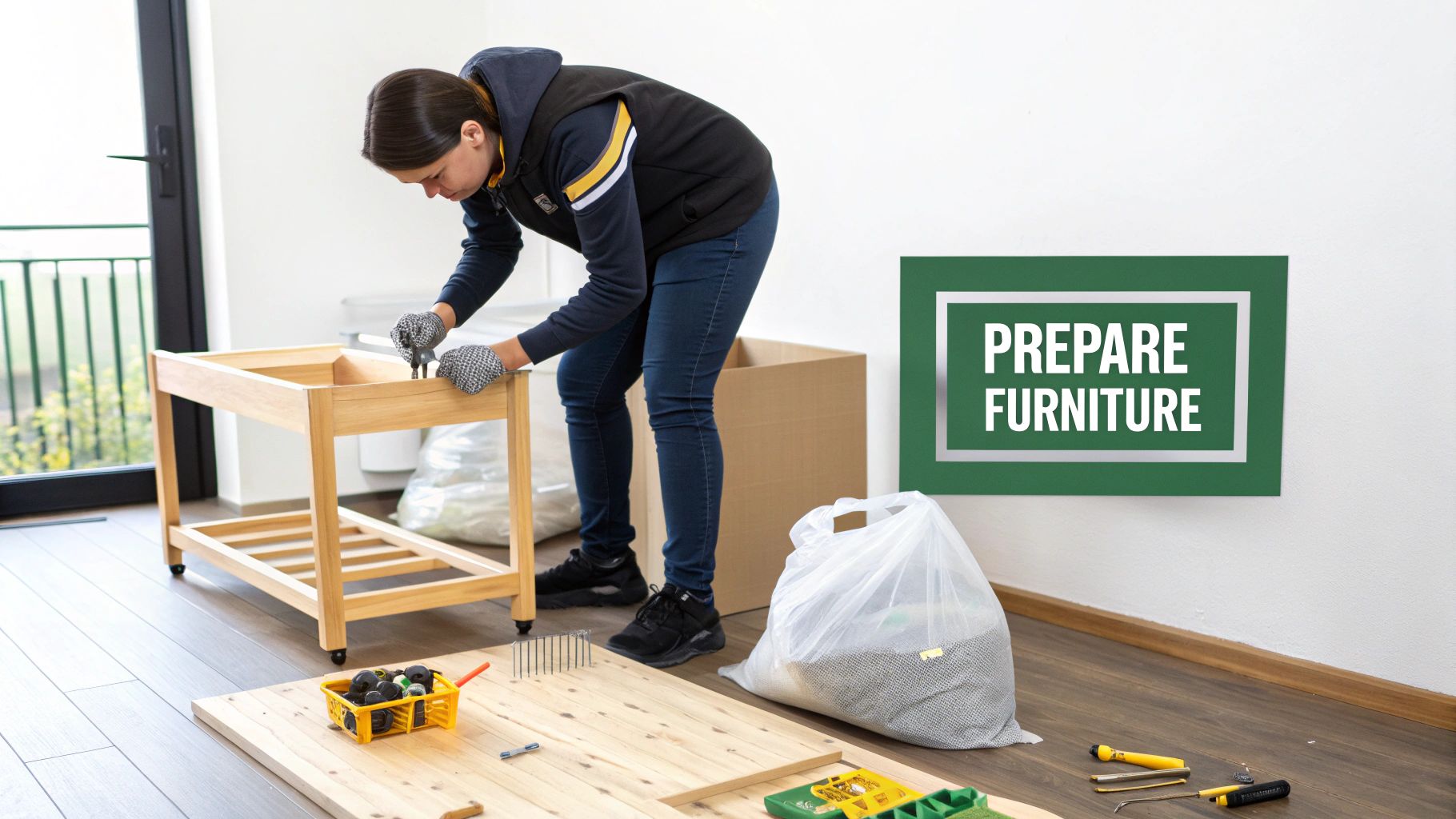
The time you put in now really pays off later. Trust me, cutting corners at this stage can lead to some nasty surprises down the line, from moisture damage to stress fractures.
Think of it as setting your furniture up for success. A clean, completely dry, and smartly disassembled piece is far better equipped to handle a stint in storage.
Why A Thorough Clean Is Non-Negotiable
Putting dirty furniture into storage is simply asking for trouble. Those tiny, forgotten food crumbs are a five-star invitation for pests, and any trapped moisture is a breeding ground for mould and mildew. Different materials need different care, so don't take a one-size-fits-all approach.
For anything wooden, a quick wipe with a gentle, wood-friendly cleaner is a must. Make sure it's bone dry before you do anything else. A good quality furniture wax can also add an extra layer of protection against the humidity in the air. Soft furnishings are just as important; for instance, knowing the best way to clean a fabric sofa can stop mould and musty smells from developing while it's packed away.
By cleaning everything beforehand, you eliminate the risk of contaminants damaging your items over time. It’s the single most effective preventative measure you can take.
Smart Disassembly: It’s Not Just About Space
It’s always a good idea to take apart larger items like bed frames, dining tables, and wardrobes before moving them. This isn't just to squeeze more into your unit; it's a massive favour to the furniture itself.
Long, unsupported pieces can easily warp or crack under their own weight during the move or while in storage. Breaking them down into smaller, more manageable parts makes them far stronger and infinitely easier to carry and stack without causing damage.
To help you stay on track, here's a quick checklist covering the essentials.
Furniture Preparation Checklist
This handy table breaks down the key tasks to ensure you don't miss a thing.
| Task | Why It's Crucial | A Practical Tip |
|---|---|---|
| Deep Clean All Surfaces | Removes food traces that attract pests and moisture that causes mould. | Use a vacuum with a crevice tool to get into every nook and cranny of sofas and chairs. |
| Disassemble Large Items | Makes furniture easier to move and prevents stress fractures on long parts. | Take photos at each stage of disassembly. They’ll be invaluable when it’s time to put it all back together! |
| Secure All Hardware | Prevents the loss of essential screws, nuts, and bolts. | Place hardware in a labelled bag and tape it securely to the main furniture piece it belongs to. |
| Let Everything Dry Completely | Trapped moisture is the number one cause of mildew and wood warping. | After cleaning, leave items in a well-ventilated area for at least 24 hours before wrapping or moving them. |
Following these simple steps will make the entire process smoother and safer for your belongings.
An Organised System For Hardware
There's nothing more frustrating than getting your furniture back from storage only to find you've lost the specific screws and bolts needed to put it all back together. A little bit of organisation here saves a massive headache later.
Here’s a foolproof method I always recommend:
- Pop all the hardware from one piece of furniture into a small, sealable plastic bag.
- Grab a permanent marker and label the bag clearly (e.g., “Screws for Pine Wardrobe”).
- Tape the bag firmly onto the largest part of the furniture it belongs to.
This simple trick ensures every nut and bolt stays with its rightful owner, making reassembly a breeze when you retrieve your things from MG Self Storage. Those extra five minutes of prep are a small price to pay for your future peace of mind.
Choosing the Right Packing Materials and Methods
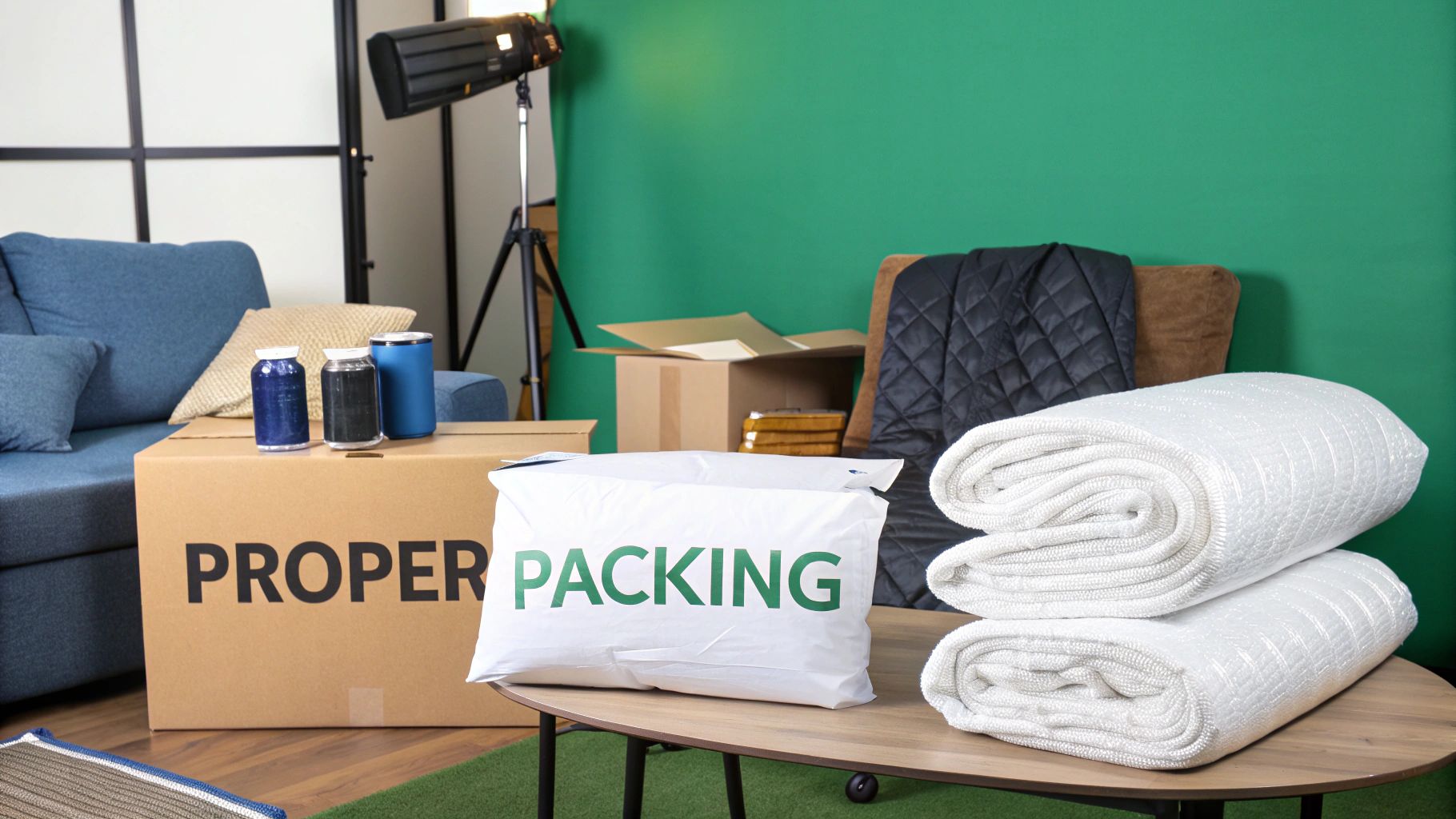
Once your furniture is properly cleaned and bone dry, it’s time to think about protection. This is where so many people make costly mistakes, reaching for old bedsheets or bin bags that just don't cut it. To be blunt, they offer almost no real defence against dust, damp, or the inevitable bumps of moving.
Investing in quality, purpose-made supplies is what separates furniture that simply survives storage from furniture that comes out looking just as good as it went in. You're creating a protective cocoon, one that shields your items without causing any hidden damage.
Prioritise Breathability Over Plastic
I see this all the time: people wrap everything in swathes of plastic film. It seems logical, but it can be a disaster for wood and fabric. Plastic traps moisture, creating a humid microclimate right against the surface. This is a fast track to mildew on your upholstery and warped, bubbled finishes on your wooden tables.
The key is to use coverings that let your furniture breathe.
- Heavy-duty removal blankets are non-negotiable for wooden pieces. They're thick enough to prevent scratches, dings, and dents on everything from tabletops to wardrobe doors.
- For sofas, mattresses, and armchairs, purpose-made breathable dust covers are a far better choice. They keep the dust out but allow air to circulate, stopping any mustiness from setting in.
These small upgrades in materials make a world of difference over a few months in storage.
Smart Wrapping Techniques For Delicate Items
How you wrap is just as crucial as what you wrap with. You don't need to mummify every single item; a more targeted approach works best and saves on supplies.
Think about the most vulnerable points. Table legs, the corners of chests of drawers, and delicate chair arms are always the first to get knocked. Wrapping these specific areas with a good layer of bubble wrap provides fantastic cushioning right where it's needed most.
Just be careful not to place bubble wrap directly against a polished or painted wood finish for long periods, as the plastic can sometimes leave faint marks. Always put a removal blanket or a soft cloth down first as a buffer. For a deeper dive into the nitty-gritty of packing, our guide on tips on moving house packing has some great extra pointers.
Here’s a little trick I’ve picked up over the years: toss a few silica gel packets into wardrobes and drawers before sealing them up. It’s an incredibly cheap and effective way to absorb any rogue moisture in the air, giving you that extra peace of mind.
Don't Forget The Smaller Details
It’s often the little things that get overlooked. Take sofa cushions, for instance. If you just chuck them in a pile, they’ll be flattened and misshapen after a few months of being squashed under other items.
A brilliant solution is to use wardrobe boxes. These tall, upright boxes are perfect for stacking cushions on their sides without compressing them. It’s a simple move, but it means they’ll come out of storage just as plump as they went in. It’s this kind of forward-thinking that makes all the difference when it comes to successful storage for furniture.
Choosing the Right Storage Unit For Your Furniture
Picking a storage unit for your furniture is about more than just finding enough space. It’s about creating a safe haven for your belongings, a place where they'll be just as you left them, whether that's in a few months or a few years.
Getting this step wrong can be costly. You might end up paying for a huge unit you don't really need, or worse, find your cherished wooden table warped by damp when you finally come to collect it. A bit of planning now goes a long way.
How Much Space Do You Really Need?
It’s surprisingly difficult to eyeball how much room your furniture will actually occupy once it's out of your house. As a rough guide, a 50 sq ft unit is often plenty for the contents of a one-bedroom flat, easily swallowing a sofa, a bed, and a couple of chests of drawers.
If you’re clearing out a three-bedroom family home, you’ll want to be looking at something closer to a 150 sq ft unit to avoid a stressful game of Tetris.
It's a balancing act. Squeeze everything into a unit that’s too small and you risk scuffs, scratches, and broken legs. Go too big, and you're throwing money away every month. If you're stuck, our guide to self-storage unit sizes is a great starting point for visualising the space and making the right call.
The Non-Negotiable: A Condensation-Proof Unit
If there’s one thing to insist on, it’s proper environmental protection. Your standard metal shipping container might seem like a bargain, but they are notorious for condensation. As the temperature outside fluctuates, moisture can form on the cold ceiling and walls, dripping onto everything below.
Damp is the arch-enemy of furniture. It can cause wood to warp and split, ruin the finish on antiques, and leave your favourite armchair smelling musty from mildew.
Opting for a modern, condensation-proofed unit isn't a luxury; it's an absolute necessity for furniture storage. It’s the single best way to ensure your items are kept dry and stable, regardless of what the British weather is doing.
Modern Security Means Real Peace of Mind
Finally, you need to know your belongings are completely secure. A simple padlock just doesn’t cut it anymore. A reputable facility should offer several layers of protection.
Look for a site that provides:
- Coded Gated Entry: This means only paying customers can get onto the site in the first place, and there’s a log of everyone who enters and leaves.
- 24/7 CCTV Surveillance: Well-placed, high-definition cameras are a huge deterrent and provide round-the-clock monitoring.
These aren't just nice-to-haves; they are the hallmarks of a professional storage facility. After all, the UK now has around 0.94 sq ft of storage space per person, so customers have come to expect these high standards. It's a combination of robust security and easy access that people value most, as highlighted in this in-depth industry report on warehousing and storage.
A Smarter Way to Load Your Storage Unit
Just throwing furniture into a storage unit is a classic mistake. It's a sure-fire way to end up with scratches and dents, not to mention the sheer frustration of not being able to find anything later on. There’s a better way to do it—a strategic approach that turns the chaos of loading into a well-organised system that protects your belongings and makes your life easier.
The trick is to start by building a solid foundation. Place your biggest, heaviest pieces—things like wardrobes, sofas, and solid chest of drawers—right at the back and along the sides of the unit. This creates a really stable base and stops your smaller, more delicate items from getting squashed.
Distribute Weight And Create A Walkway
Once those heavy anchors are in place, you can start filling in the space with medium-weight items, like your dining chairs or a disassembled table top. The key here is to spread the weight out evenly across the unit. This stops any one stack from becoming a wobbly, unstable tower that could come crashing down.
The same kind of thinking that goes into efficiently arranging furniture for optimal space in your home applies here. One of the best things you can do is leave a clear walkway down the centre, running from the door right to the back. This little corridor is an absolute lifesaver, letting you get to items at the rear without having to unpack the entire unit just to find one box.
Think of loading your unit like a game of Tetris, but with one crucial difference: you need to be able to access every piece. A central aisle is your secret weapon for making this possible.
This visual guide breaks down the most important things to consider when choosing your unit, from its size and environment to the security features on offer.
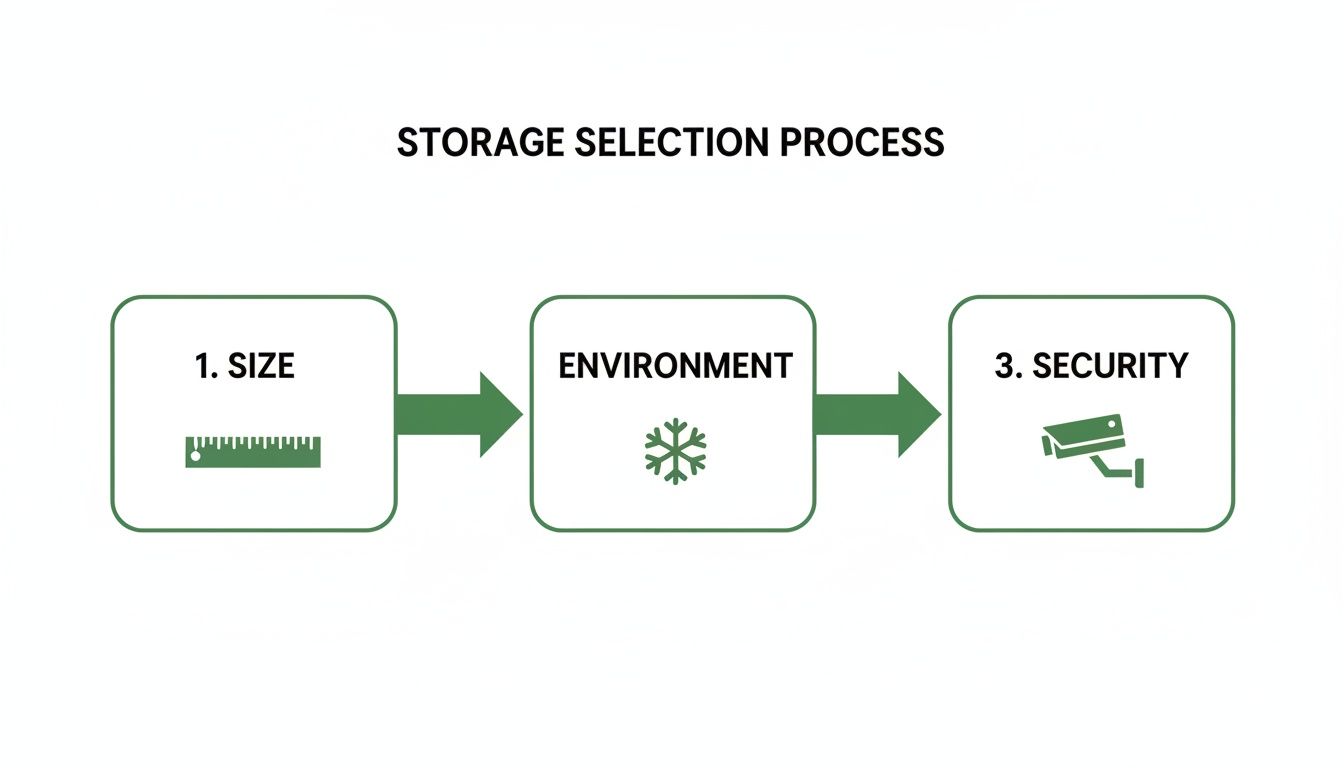
It’s a great reminder that a good storage plan starts long before you even begin packing.
Practical Tips For Protecting Your Items
After you’ve got the main structure sorted, you can start filling in the gaps with lighter boxes and more fragile belongings. There are a few pro techniques I’ve learned over the years that can make a massive difference in keeping everything in perfect condition.
Here are a few insider tips for loading your unit like an expert:
- Keep Furniture Off The Floor: Before you move a single item in, lay down a few wooden pallets. This raises everything off the concrete by a few inches, protecting your furniture from any potential dampness and allowing vital air to circulate underneath.
- Store Mirrors And Pictures Vertically: Whatever you do, don't lay mirrors or large framed artwork flat. The pressure on the glass is just too much. The safest bet is to store them standing upright, wedged securely between two mattresses or propped against the soft back of a sofa.
- Use Every Available Space: Don't forget about all that empty space inside wardrobes and drawers! It's the perfect spot for stashing smaller boxes or soft items like bags of linen. It’s a great way to maximise every inch of your unit.
By taking this strategic approach, you won't just fit more in; you'll ensure that your storage for furniture keeps every piece safe, stable, and easy to get to when you need it.
Keeping Your Furniture in Top Shape for the Long Haul
When you’re putting furniture away for a few months or even longer, you need to think a little differently. Just locking the door and walking away isn’t the best strategy; that's how you come back to musty smells or other preventable problems. A bit of proactive care is all it takes to make sure everything comes out looking just as good as it went in.
This doesn't mean you have to spend hours at your unit every week. It's more about a few smart, simple checks that will give you total peace of mind.
The Power of a Quick Pop-In
Try to get into the habit of visiting your unit every few months. It's a fantastic way to keep tabs on everything. You can give your belongings a quick once-over, make sure nothing has shifted or settled awkwardly, and just check that it’s all exactly as you left it.
More importantly, just opening the door for 15-20 minutes lets the air circulate. You’d be surprised how effective this is at preventing that stale, stuffy feeling that can make sofas and chairs smell musty. It’s a tiny bit of effort that pays off massively.
A Little Extra Care for Different Materials
Different materials need different kinds of TLC, especially when they're going to be stored for a while. Taking a few extra minutes to prep your items before you lock up can make a world of difference down the line.
- Wooden Furniture: Before it goes into storage, give it a good going-over with a quality wax furniture polish. This creates a barrier that helps stop moisture from getting in and prevents the wood from drying out and cracking.
- Delicate Items: If you're stacking things like picture frames or storing table leaves, slip a sheet of acid-free paper between them. Regular paper can yellow over time and even transfer chemicals, but acid-free paper won't damage the finish.
- Upholstery: It’s a great idea to tuck a few moisture-absorbing sachets or silica gel packs down the side of your sofa or armchair. They’ll work quietly in the background to pull any dampness out of the air.
This kind of material-specific prep is at the heart of good storage for furniture, especially when you're looking at the long term. For a deeper dive, check out our guide to long-term storage solutions.
Why Insurance Is Your Ultimate Safety Net
Even though modern facilities like ours at MG Self Storage are incredibly secure, specialist insurance is non-negotiable for long-term storage. It’s the safety net that protects your investment against the unexpected, like a fire, flood, or theft. Security is one thing, but proper insurance gives you a different level of confidence.
A word of warning: never assume your home insurance will cover your items in storage. Many policies have very specific limits or exclusions for anything kept off-site. Always, always check the small print with your provider.
The self-storage industry here in the UK has come a long way, now bringing in revenues of over £1.2 billion from more than 64 million square feet of space. This boom means the industry has become far more professional, with comprehensive customer protection—including clear insurance options—now being the standard. You can read more about these trends in a report on the UK self-storage market from Janus Europe. Getting the right cover in place simply means your furniture is fully protected, giving you one less thing to worry about.
Got Questions About Storing Your Furniture? We’ve Got Answers.
Putting your furniture into storage can bring up a lot of questions. That’s perfectly normal. Getting the right answers means you can make decisions with confidence, knowing your belongings are in good hands.
We get asked a lot about the dos and don'ts of furniture storage, so we’ve put together some straightforward advice on the most common queries. Think of this as your go-to resource for making the whole process simpler.
How Can I Stop Wooden Furniture Getting Damp in Storage?
The absolute best way to protect wood is to start with the right unit. A modern, well-ventilated unit designed to prevent condensation is your first line of defence.
Before you even think about moving it, make sure the wood is spotlessly clean and bone dry. A good quality wax polish isn’t just for looks; it creates a protective barrier that helps repel moisture. And whatever you do, don't wrap wood directly in shrink wrap. It’s a recipe for disaster, as it traps any moisture against the surface and can completely ruin the finish.
Instead, cover your pieces with breathable materials. Old cotton sheets or proper removal blankets are ideal. It’s also a smart move to place everything on top of pallets, which keeps your furniture off the concrete floor and allows air to circulate underneath.
Is There Anything I’m Not Allowed to Store?
Yes, and it’s all for safety. You can’t store anything hazardous. This is a strict rule that includes things like petrol, paint thinners, fireworks, toxic chemicals, and gas canisters.
You're also not allowed to store anything perishable. That means no food items, as they'll attract pests and create a real mess. The golden rule is simple: if it's flammable, illegal, or can rot, it doesn’t belong in a storage unit. When in doubt, just ask us.
Think of it this way: storage units are for household goods, furniture, and business archives. Keeping dangerous or decomposing items out ensures the facility remains safe and clean for everyone.
Can I Get to My Furniture Whenever I Need It?
Flexibility is key, and most modern storage facilities are built with that in mind. Here at MG Self Storage, for instance, our coded gate system gives you secure access 24 hours a day, 7 days a week.
This means you’re not tied to office hours. If you need to grab something early in the morning before work or drop something off late at night, you can. It’s always worth double-checking the specific access arrangements at any facility, just to be sure it suits your schedule.
Will I Need Special Insurance for My Stored Furniture?
While we go to great lengths to secure our facility, we always recommend getting specialist insurance. It’s an essential layer of protection.
Your home insurance policy might provide some cover for items you keep off-site, but you really need to read the small print. Often, these policies have significant limitations or lower payout values for stored goods.
A dedicated self-storage insurance policy is usually the better option. It offers comprehensive cover for things like fire, theft, and water damage, giving you proper peace of mind that your valuable storage for furniture is financially protected.
Ready to store your furniture with confidence? At MG Self Storage, we offer secure, condensation-proofed units with 24/7 access to keep your belongings safe and accessible. Find your perfect storage solution today by visiting us at https://mgselfstorageexeter.co.uk.


