
Let's be honest, moving house is one of life's bigger projects. The secret to keeping your sanity isn't just about having enough boxes; it's about having a solid plan. I've found that breaking the whole thing down into smaller, manageable chunks over a couple of months makes all the difference. This way, you can avoid that last-minute scramble and actually have a smooth transition into your new place.
Your Essential Moving Timeline and Checklist
Think of your move as a marathon, not a sprint. A stress-free move is born from careful planning that starts weeks, and sometimes even months, before the big day. When you spread the workload out, what feels like a mountain of a task becomes a series of simple steps. It gives you the breathing room to properly vet removal companies, declutter without feeling rushed, and tick off all the admin.
To keep everything in one place, a detailed essential moving checklist and timeline guide can be a real lifesaver.
The First Steps: Eight Weeks Out
Right, let's get the ball rolling. About two months before you move is the perfect time to lay the groundwork. This is the planning stage, where you figure out the budget and the core logistics of how this is all going to happen.
- Set a Realistic Budget: Tally up every potential cost. Think removal firms, packing materials, maybe a storage unit, and even professional cleaning services. It’s always a good idea to add a little extra for those "just in case" moments.
- Research Removal Firms: Don't just go with the first quote. Get at least three from reputable companies. Check their reviews online, confirm their insurance cover, and get a clear idea of what’s included. This is also your chance to decide if you’re brave enough to tackle a DIY move with a hired van.
- Start the Decluttering: Seriously, don't leave this until you're surrounded by boxes. Starting early means you can take your time. You can sell items you no longer need, drop things off at charity shops, and get rid of rubbish without the pressure of a looming deadline.
Breaking it down visually can really help simplify things.
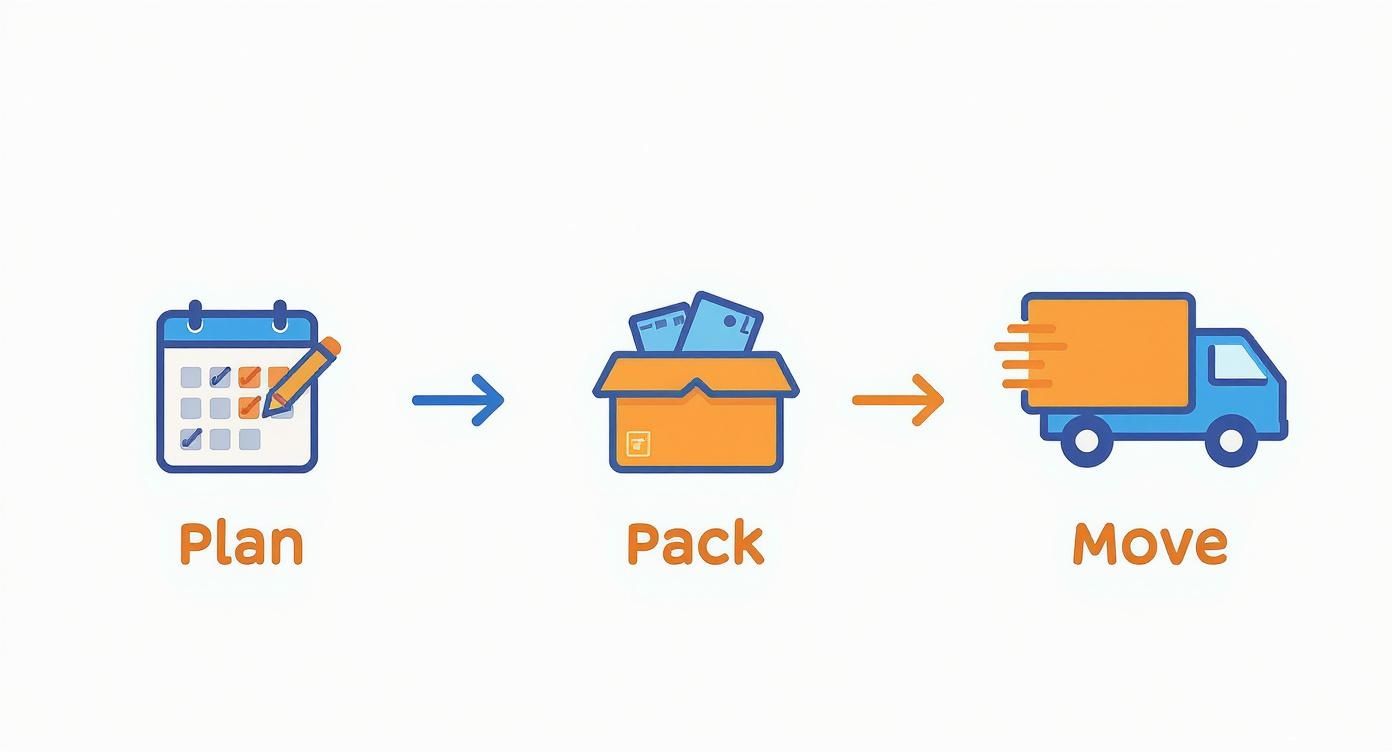
Seeing the move as these three distinct phases—planning, packing, and the actual move—helps keep you focused on what needs doing right now.
The Countdown: Four to Six Weeks Before
With the move getting closer, your focus will naturally shift from high-level plans to more hands-on tasks. Now is the time to start making a proper inventory of everything you own. This will give you a much better idea of how many boxes you’ll need and whether a temporary storage unit might come in handy.
It's also worth thinking about when you’re moving. The UK housing market has some serious seasonal peaks. August, for example, is notoriously busy. On the busiest days, the number of moves can be four times the daily average. What does that mean for you? Well, a staggering 85% of removal firms report that delays are far more likely on these peak days. Knowing this helps you plan strategically to sidestep the chaos and potential extra costs.
Expert Tip: Book your removal company well in advance, especially if you're planning a summer move. The good ones get snapped up months ahead, and leaving it to the last minute could see you paying over the odds or settling for a service that isn't up to scratch.
The Final Stretch: Two to Four Weeks To Go
You’ve got a date in the diary. Now the final push is all about logistics and getting things packed. Circle back with your chosen removal company to confirm all the details – arrival times, parking arrangements, and any special handling instructions for your fragile or valuable items.
This is also the perfect time to start packing all the non-essentials. I’m talking about out-of-season clothes, the books you've already read, and decorative bits and pieces. Anything you know you won't need in the next few weeks can go into a box. And a pro tip: label every single box with its contents and the room it's destined for. It feels tedious at the time, but you’ll thank yourself when you’re not opening 10 boxes marked "kitchen" just to find the kettle.
To make sure no small detail slips through the cracks, our complete moving out checklist breaks down every last task.
To give you a quick overview, here's a handy countdown to keep you on track.
The Ultimate Moving House Countdown Checklist
| Timeframe | Key Tasks to Complete |
|---|---|
| 8 Weeks Out | Set your budget, research and get quotes from removal firms, and begin a major declutter. |
| 6 Weeks Out | Book your chosen removal company, order packing supplies (boxes, tape, bubble wrap), start packing non-essential items. |
| 4 Weeks Out | Notify utility companies (gas, electric, water), council tax, and broadband providers of your move date. |
| 2 Weeks Out | Arrange for mail redirection with Royal Mail. Confirm all details with your removal firm. Pack the majority of your belongings. |
| 1 Week Out | Defrost the freezer, pack a "first night" essentials box (kettle, mugs, toiletries, chargers), and dismantle any large furniture. |
| Moving Day | Take final metre readings, do a final walkthrough to check nothing is left behind, and collect the keys to your new home! |
Following a timeline like this transforms a daunting process into a series of clear, achievable steps, setting you up for a successful move.
Decluttering and Packing Like a Professional
If there's one secret to a less stressful move, it's this: get rid of what you don't need before you even think about packing. A house move is the perfect excuse for a proper clear-out. It means you only end up moving—and paying to move—the things you actually use and love. Trust me, it saves a mountain of time and money, and makes setting up your new home infinitely easier.
The key is not to get overwhelmed. Just start with one room, or even just one drawer. Once you get going, you'll build momentum, and the whole task will feel much less daunting.

The Four-Box System: A Framework for Success
To stay on track and make clear decisions, I always recommend the 'four-box' method. It’s dead simple. As you work through a room, every single item you pick up has to go into one of four boxes or piles. This forces you to make a definite choice about its future.
Here are your four categories:
- Keep: No-brainers. These are the things you're definitely taking with you.
- Donate: Anything in good nick that you just don't use anymore. Let it find a new home at a local charity shop.
- Sell: Items that have a bit of value—think furniture, electronics, or designer clothes. Get them on a selling site and make a bit of cash.
- Bin: Anything broken, past its best, or just not worth keeping. Be ruthless!
Using this system turns a chaotic mess into an organised set of decisions, setting you up perfectly for the packing phase.
Professional Packing Strategies
Once the decluttering is done, it’s time to pack properly. Using the right materials and techniques is what stands between your possessions arriving in one piece or in a hundred. Don't be tempted to skimp here; a bit of extra effort now saves a lot of heartache later.
First things first, get your supplies sorted. You'll need sturdy, double-walled boxes in a few different sizes, decent packing tape, lots of packing paper (avoid newspaper—the ink can rub off), and a good marker pen. For a deeper dive, check out these expert tips on moving house packing to get everything just right.
A Golden Rule of Packing: Always put heavier things at the bottom of the box and lighter items on top. It’s a simple trick, but it stops your delicate items from getting crushed and makes the boxes far more stable to carry and stack.
Good packing is also about safety. A classic mistake is filling a huge box with heavy things like books. Not only could the box give way, but you're also risking a serious back injury. A much better approach is to use smaller boxes for all your heavy items to keep the weight of each one manageable.
Labelling for Effortless Unpacking
Proper labelling is a gift to your future, exhausted self. Every single box needs two key bits of information: which room it's destined for, and a quick summary of what's inside. "Kitchen – Pots & Pans" is a world away from a vague "Kitchen" label when you're desperate for a saucepan.
This level of detail means you or the removal crew can put every box straight into the right room, saving you the back-breaking job of shifting them all around later.
Finally, put together a 'first-night essentials box' and make sure it travels with you in the car, not in the back of the van. This is your survival kit for the first few hours in your new place.
- Essentials to Pack:
- Kettle, mugs, tea/coffee, and milk
- Toiletries and a towel for each person
- Phone chargers and maybe a portable speaker
- Basic tools like a screwdriver and a box cutter
- Crucial documents and any daily medications
Having this box handy means you can have a well-deserved cuppa and feel human again without having to tear open a dozen boxes. It’s a small thing that makes an enormous difference on moving day.
Hiring Removal Experts vs The DIY Move
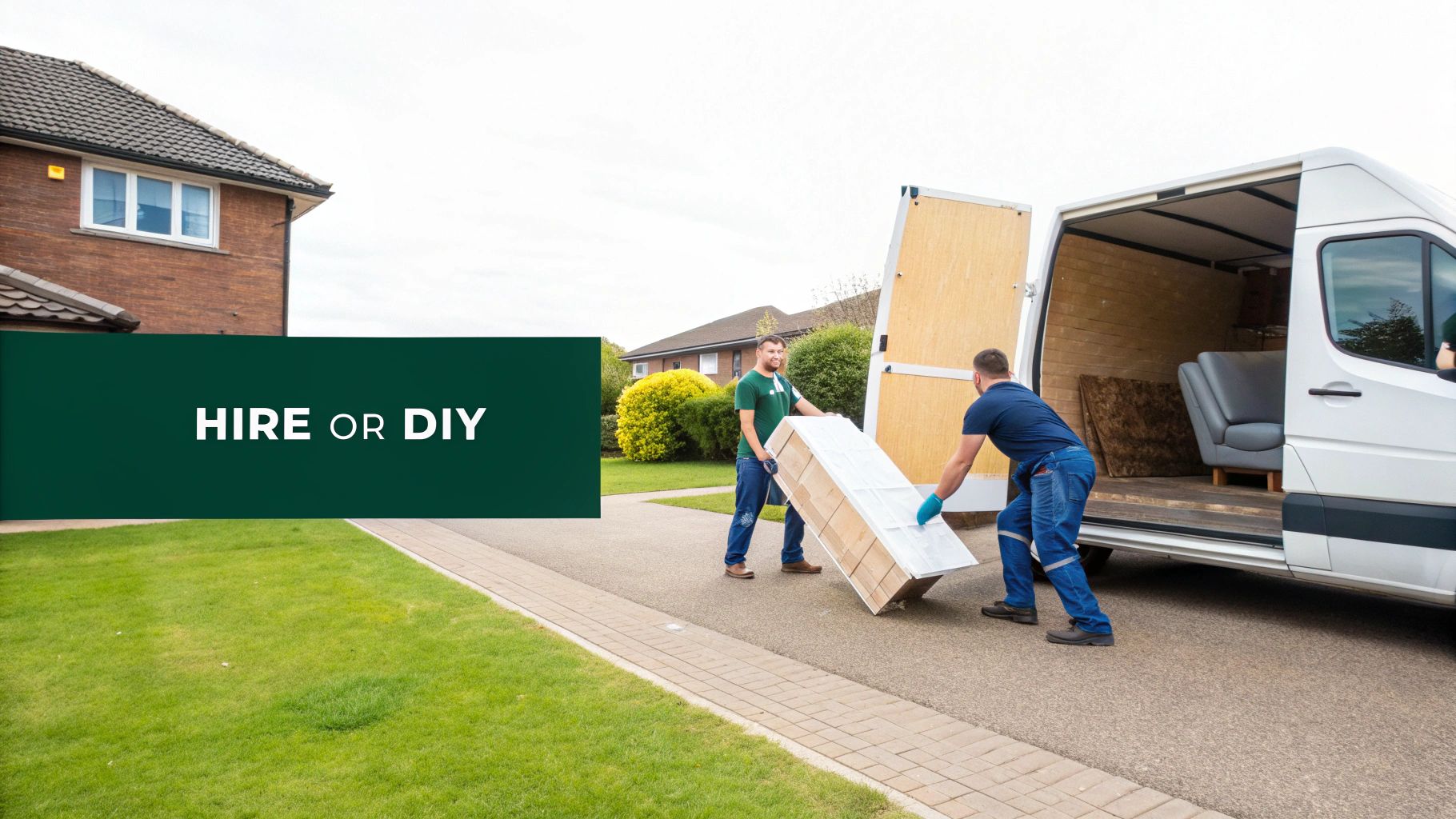
This is one of the biggest decisions you’ll make during your move: do you call in the professionals, or do you roll up your sleeves and do it all yourself? It’s a classic fork in the road. Choosing between a removal company and a DIY move isn’t just about the cost on paper; it's a trade-off between convenience, your time, and a whole lot of physical effort.
A professional crew brings experience and efficiency, turning what can be a chaotic day into a surprisingly smooth operation. On the other hand, the DIY approach gives you total control and can definitely save you some money, but it comes with its own brand of stress and hidden costs. Let's break down what each path really involves so you can figure out what’s right for you.
Going with the Professionals
Let’s be honest, opting for a removal company is often the path of least resistance, and for good reason. The most immediate win is handing over the immense physical labour of the day. Professional movers are experts at wrestling with heavy furniture, navigating tight corners, and loading a van with a skill that resembles a real-life game of Tetris.
When you start looking for a reputable firm, the golden rule is to get at least three quotes. Don't just glance at the final figure, though. You need to dig into the details of what that price actually includes.
- Insurance: Is your stuff covered? Find out what level of protection they offer. Is it ‘new for old’ replacement value, or just the depreciated current value? The difference can be huge.
- Extra Services: Many firms offer packing services, supply all the boxes and tape, and even dismantle and reassemble big items like beds and wardrobes. These can be absolute lifesavers.
- Accreditation: It’s always a good sign if the company is a member of the British Association of Removers (BAR). This gives you a bit more peace of mind that they adhere to professional standards.
Before you agree to anything, ask them some direct questions. What’s their plan if there are delays getting the keys? What’s their cancellation policy? And crucially, what happens if something gets broken? A trustworthy company will be upfront and happy to answer everything.
Tackling the DIY Move
Managing the move yourself can feel like the smart, money-saving option, and for smaller moves over short distances, it often is. Your first job is to hire a van. Getting the size right is crucial – go too small and you’re stuck making multiple, time-consuming trips; go too big and you’re wasting money on fuel and wrestling with a vehicle that’s a nightmare to park. Most van hire sites have handy size calculators to help you out.
But the DIY route is full of hidden hurdles. The upfront van hire is just the start. You have to budget for fuel, which can add up quickly on longer drives. Plus, your standard car insurance almost certainly won’t cover your possessions while they’re in the van, so you might need to arrange separate goods-in-transit insurance.
Remember, the true cost of a DIY move is measured in more than just pounds. The sheer physical effort is no joke and can lead to complete exhaustion or even an injury if you’re not careful.
Ultimately, the choice comes down to what you can handle and what you value most – time, money, or your sanity! To help you weigh it all up, here’s a straightforward comparison.
Professional Movers vs DIY Move: A Head-to-Head Comparison
| Factor | Hiring Professionals | DIY Move |
|---|---|---|
| Cost | Higher initial outlay, but costs are fixed and all-inclusive. | Lower initial cost, but can increase with fuel, insurance, and multiple trips. |
| Effort | Minimal physical effort required from you. The team does the heavy lifting. | Very high physical demand. You are responsible for all lifting, loading, and driving. |
| Time | Significantly faster. An experienced crew can clear a house in hours. | Much slower. Loading, driving, and unloading will likely take the entire day, if not longer. |
| Insurance | Goods are typically insured against damage or loss as part of the service. | Requires separate, often costly, goods-in-transit insurance. Your car policy won't cover it. |
| Convenience | High. Professionals manage the logistics, letting you focus on other tasks. | Low. You are the project manager, driver, and labourer all rolled into one. |
Taking an honest look at these factors should point you in the right direction for your specific move.
Using Self Storage for a Smoother Move
Let’s be honest, moving house rarely feels like a smooth, seamless transition. It's often a frantic dash against the clock. But it doesn't have to be. Self storage is the secret weapon savvy movers use to turn a high-stress deadline into a flexible, manageable project. It creates breathing room right when you need it most, putting you back in control.
Think about those classic moving-day nightmares. What if your completion dates don't line up perfectly, leaving you homeless for a few days or even weeks? Or perhaps you're trying to sell your current place, and it would look a lot more appealing to buyers without all the clutter and personal effects.
A storage unit is the perfect solution in these moments. It gives your belongings a secure, temporary home, so you can stop panicking about logistics and focus on the bigger picture.
Choosing the Right Storage Solution
First things first: you need to figure out what size unit you'll actually need. This is a crucial step. Go too small, and you'll be tearing your hair out trying to cram everything in. Go too big, and you're just throwing money away on empty space. The trick is to think about your belongings as if they were already packed and stacked.
- Small Units (e.g., 25-50 sq ft): These are ideal for the contents of a studio flat or for students who need somewhere to stash their stuff over the summer. Picture a large walk-in wardrobe, and you've got the right idea.
- Medium Units (e.g., 75-100 sq ft): A unit this size can usually handle the contents of a one or two-bedroom flat. It’s big enough for major pieces like sofas, dining tables, and beds.
- Large Units (e.g., 150+ sq ft): If you're moving out of a three or four-bedroom house, this is likely what you'll need. There’s plenty of room for all your furniture, appliances, and even the garden shed contents.
Getting a clear mental image of what fits where can be tough. For a much more detailed breakdown, have a look at our complete guide to understanding self storage unit sizes to find your perfect match.
After you've settled on a size, your next priority should be security. Any facility worth its salt will have solid measures in place to protect your possessions. You should be looking for 24/7 CCTV surveillance, secure gated entry (preferably with a personal code), and a well-lit site. These are the non-negotiables that give you peace of mind.
Maximising Your Storage Space
You've got the unit—now it's time to pack it like a pro. A bit of planning here will save you a world of pain later. The aim isn't just to fit everything in, but to arrange it so you can still get to things if you need them.
Always start with the big, heavy items. Things like wardrobes, washing machines, and chests of drawers should go against the back wall. To free up floor space, stand sofas and mattresses on their ends (just make sure you've wrapped them in protective covers first).
Pro Tip: Always leave a walkway down the middle of your unit. This simple central aisle means you can reach the boxes at the back without having to play a frustrating game of Tetris every time. It’s a total game-changer.
Label every single box on multiple sides—don't just scrawl on the top. It’s also a great idea to keep a master inventory list on your phone. That way, when you desperately need your kettle or the kids' favourite toys, you'll know exactly which box holds the treasure. Pack smart, and your unit becomes an organised extension of your home, not just a chaotic dumping ground.
Taking Care of the Life Admin: Your Change of Address and Utilities Checklist
Let’s be honest, moving house isn't just about lugging boxes. There's a mountain of life admin that comes with it, from telling your bank you've moved to making sure the lights turn on when you arrive. Getting this bit wrong can lead to some real headaches – think missed bills, important post going to the wrong house, and even identity theft risks.
The best way I've found to tackle this is to break it down. Don't try to do it all at once. Grab a notebook or open a spreadsheet and create a checklist. It turns a massive, overwhelming task into a series of small, manageable wins.
Who to Tell First: Government and Official Bodies
These are the big ones, the non-negotiables. They’re tied to your legal and civic duties, so it’s best to get them sorted at least a couple of weeks before the move. Their systems can be slow, so give them plenty of notice.
- Council Tax: You'll need a chat with two different councils – your current one and your new one. Let your old council know when you're leaving so they can send a final bill. Then, get registered with the new council sharpish to avoid any missed payments.
- DVLA: This is a legal must-do. You have to update the address on both your driving licence and your vehicle’s V5C log book. It's free to do online, but forgetting could land you with a fine of up to £1,000.
- Electoral Roll: Want to have your say in the next election? You need to re-register at your new address. It only takes a few minutes on the GOV.UK website and ensures your voice is heard.
Your Finances and Insurance
Next up are all your financial providers. They need your new address for security reasons and to send you important documents. Aim to get in touch with them about a week before you move.
Leaving your old address on bank statements is a major security risk. Thankfully, a quick phone call or logging into your online account is usually all it takes to update your details.
Make a list of every single one: banks, credit cards, pension providers, and don't forget those store cards or personal loans. You'll also need to give your new address to your home, car, life, and pet insurance companies to make sure your policies stay valid.
Your Secret Weapon: Seriously, don't skip this. The Royal Mail Redirection service is a lifesaver. For a small fee, they’ll forward all post from your old address for 3, 6, or 12 months. It’s the perfect safety net to catch anything you’ve forgotten.
Getting Your Utilities Switched Over
Timing is everything here. The goal is a seamless handover – no paying for energy at your old place and, crucially, no arriving at your new home in the dark. Give your providers a call about two weeks before moving day.
On the day you move out, take final metre readings for gas, electricity, and water. A quick photo on your phone is brilliant proof. Do the exact same thing as soon as you walk into your new home. This ensures you only pay for what you actually use.
Here’s your contact list:
- Energy Suppliers: Your gas and electricity provider.
- Water Company: The local supplier for water and sewerage.
- Communications: Broadband, landline, and any TV services. These can take a while to get sorted, so give them as much notice as you possibly can.
This admin slog is a universal part of the moving experience. In fact, recent stats show that one in six UK homeowners are planning a move, often in search of more space or a different lifestyle. It’s a good reminder that you’re not alone in navigating this maze of paperwork! You can read more about these moving trends on Money Sage News.
Don’t Forget Your Subscriptions and Personal Services
Last but not least, think about all the other services that are part of your daily life. While not as urgent as the DVLA, getting these updated means you won't miss a magazine delivery or an important appointment reminder.
A few weeks out, start a running list of people and companies to notify. This could be your GP, dentist, optician, and the vet. You’ll also need to update any subscriptions – think streaming services, online shopping accounts like Amazon, and magazine deliveries. Sorting these small details is what helps your new house feel like home that much faster.
Your Moving House Questions Answered
Even the most organised move can leave you with a few head-scratchers. Getting answers to those common worries can be the difference between a stressful day and a smooth transition. Let's tackle some of the questions we hear all the time to help you navigate the final stretch of your move with confidence.
How Far In Advance Should I Book a Removal Company?
My best advice? Book your removal company at least four to six weeks before you plan to move. This is absolutely crucial if you’re aiming for a peak time, like the summer holidays or a Friday—the most popular moving day of the week by a long shot.
Giving yourself this much lead time allows you to shop around properly. You'll have plenty of time to get at least three quotes, check out reviews, and find a reputable firm that won't break the bank. If you're moving in a quieter, off-peak period, you might get away with two or three weeks' notice, but booking early almost always means more choice and better prices. The moment you have that exchange date set in stone, get on the phone and lock in your movers.
What’s the Best Way to Pack Fragile Items?
When it comes to your breakables, it’s all about creating a cushion and stopping things from rattling around. For plates and glasses, wrap every single item individually in packing paper. A classic mistake is to stack plates flat on top of each other. Don't do it! Instead, pack them on their sides in the box, like records in a crate. It distributes the pressure far more effectively.
A few tried-and-tested techniques:
- Use Dividers: Simple cardboard dividers are a godsend for keeping glasses and mugs from clinking together.
- Fill Every Gap: Any empty space is a risk. Stuff it with crumpled paper, bubble wrap, or even soft things like tea towels to prevent any movement.
- Label Everything: This one is non-negotiable. Mark the box clearly as ‘FRAGILE’ on the top and all four sides. It’s the clearest signal you can give your movers to take extra care.
What Are My Main Tasks on Moving Day?
On the day itself, your job isn't to do the heavy lifting—it's to be the director of the show. You’re there to guide the removal crew and make sure everything ends up where it’s supposed to go.
Before they lift a single box, do a final walkthrough of your old place with the team leader. Point out exactly what’s going and what’s staying. Crucially, keep your 'essentials box' with you in the car so it doesn't get buried in the back of the van. As each room empties, do one last sweep of cupboards, the shed, and the loft. And just before you lock up for good, snap a quick photo of the metre readings.
When you arrive at your new home, have a simple floor plan handy to show the team where the big furniture and boxes should go. This little bit of prep will save you a world of backache later.
A well-organised moving day isn't about doing the heavy lifting yourself; it's about clear communication and effective supervision. A calm director makes for a smooth production.
How Can I Reduce the Cost of Moving House?
There are definitely ways to make your move more affordable without cutting important corners. The single most effective way to save money is to declutter ruthlessly. It’s simple maths: the less stuff you have, the less it will cost in packing materials, man-hours, and van space.
Beyond decluttering, here are a few more tips:
- Be Flexible with Your Date: If you can, move mid-week. It’s almost always cheaper than a Friday or a weekend.
- Source Free Boxes: Pop into local supermarkets or check online community groups. You can often find perfectly good used boxes for free.
- Do Your Own Packing: Professional packing services are a great luxury, but doing it yourself will shave a significant amount off the final bill from your removal company.
The urge to move is felt all over the UK, but it’s stronger in some places than others. Residents of Bournemouth seem the most eager to relocate, with over 38,000 monthly moving-related searches per 100,000 people. At the other end of the scale, Derry is the least keen with just over 3,000. These regional trends show just how much local life can influence big decisions. And if your moving plans involve a bit of a gap, it's worth reading up on finding temporary housing solutions during home renovations or transitions.
Whether you're downsizing, decluttering, or just need a secure space to bridge the gap during a complicated move, MG Self Storage offers flexible and secure solutions to make it all a bit easier. With a range of unit sizes, 24/7 access, and top-tier security, we give you the breathing room you need. Visit us online to find the perfect storage unit for your move at https://mgselfstorageexeter.co.uk.