Think of long-term storage as a secure, secondary home for your belongings when life's big changes come knocking. Generally, we're talking about storing things for six months or more, making it the perfect answer for navigating a house move, downsizing, or even working abroad for a year.
Understanding Long-Term Storage
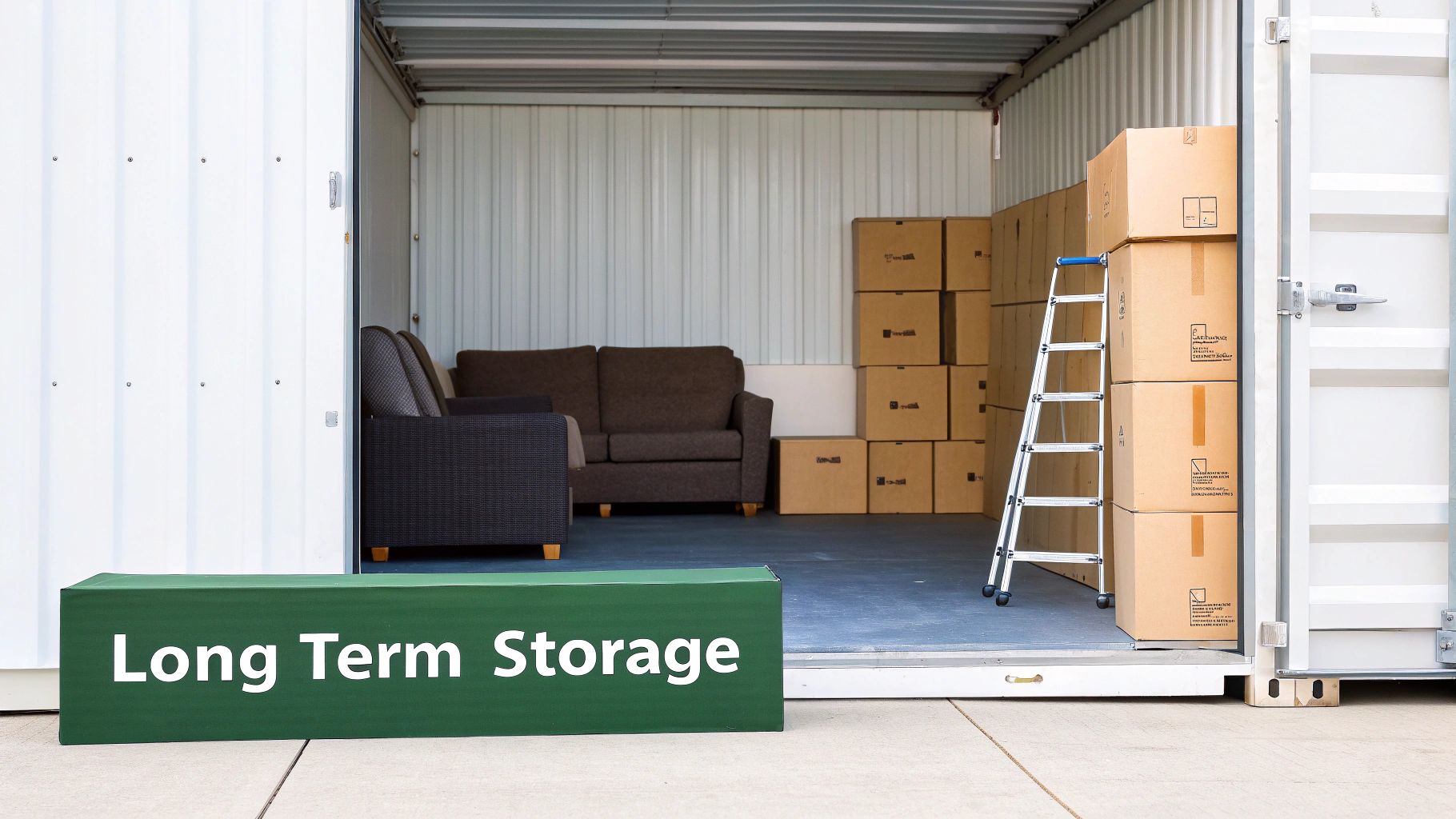
At its heart, long-term storage is much more than just a space to stash things you don’t currently need. It’s really a service designed to safeguard your possessions over a long haul, acting as a bridge during those major life transitions. Unlike short-term storage, which might only be for a few weeks, long-term options are built for stability and preservation.
Picture this: you're moving house, but the completion dates just don't line up. Instead of frantically trying to make it work or living in a fortress of boxes, a storage unit provides a safe haven. It gives you the breathing room to handle the move at your own pace, cutting down the stress and keeping your belongings protected.
This kind of solution is just as valuable for businesses. A local company might use a unit to archive important documents, hold onto excess stock, or store equipment that isn't needed every day. This frees up pricier commercial space for what really matters—running the business.
Common Scenarios for Needing Storage
Lots of different situations can call for a reliable long-term storage solution. Each one presents its own unique challenge where having that extra, secure space becomes a real game-changer.
Here are a few classic examples:
- Moving House: When there's a gap between selling your old place and getting the keys to the new one, storage keeps everything safe and sound.
- Downsizing: Moving to a smaller home? You can store cherished furniture and possessions you just don’t have room for right now.
- Working or Travelling Abroad: For extended trips, a storage unit offers complete peace of mind that your belongings are secure back in the UK.
- Home Renovations: Major building work is so much easier when you can clear out entire rooms and protect your furniture from dust and damage.
- Business Needs: From archiving paperwork to managing seasonal inventory, businesses can use storage to operate far more efficiently.
The real benefit of long-term storage is the sheer flexibility it gives you. It turns a logistical nightmare into a straightforward plan, letting you focus on the big move itself, not just the "stuff" involved.
Why the UK Demand for Storage Is Growing
The need for this kind of space is becoming more and more common across the country. In fact, the UK self-storage industry has seen massive growth, with a 7.2% increase in available space over the last year alone, hitting a total of 64.3 million square feet as of 2025.
This boom reflects a rising demand from both personal and business users, with the sector's annual turnover now topping an incredible £1.2 billion.
This growth really shows how modern life requires adaptable space. To properly manage your items, keeping a detailed off-site storage inventory is crucial so you always know exactly what you have packed away. At the end of the day, long-term storage has become an essential tool for managing our lives in a world where things can change in the blink of an eye.
Choosing the Right UK Storage Facility
Picking the right place for long term storage is probably the biggest decision you'll make in this whole process. It's about so much more than just finding the closest or cheapest option. You're entrusting things you care about to someone else's care for months, maybe even years, so it has to be right.
Think of it like choosing a long-term home for your belongings. You’d want to know it's safe, secure, and well-maintained. A little bit of homework now will save you a world of stress and potential heartache down the line. We’ll walk through the key things to look for, from the practicalities of location to the absolute essentials like top-notch security.
Location, Access, and Convenience
While security is king, the facility's location still really matters. Even if you don't plan on popping in every week, you'll want a site that isn't a massive trek to get to. A convenient location makes moving day far less of a headache and is a lifesaver if you suddenly realise you need to grab something you packed away.
You also need to think about when you can get in. Look for places that offer flexible access. Many modern facilities, like ours here at MG Self Storage, provide 24/7 access with a secure coded gate. This kind of flexibility is a game-changer, meaning you’re never locked out and can get to your things whenever it suits you, not just during office hours.
Getting the Unit Size Just Right
It’s one of the easiest mistakes to make: either renting a unit that’s way too big and wasting money, or trying to cram everything into a space that’s just too small. Nailing the right size is not only good for your wallet, but it's also crucial for keeping your items in good nick. Overcrowding is a recipe for scratches, breakages, and poor air-flow.
Before you commit, take a few minutes to roughly inventory what you're storing. Think about your biggest pieces, like a sofa or a bed frame, and how much floor space they'll eat up. Most good storage providers have online guides to help you visualise the space.
For a really helpful breakdown with visual examples, have a look at our guide on how to choose the correct self-storage unit sizes. It takes the guesswork out of the equation. Getting this spot-on ensures everything has room to breathe, which is essential for preventing mould and mildew over the long run.
Why Climate Control Is So Important
When you're storing things for more than a couple of months, climate-controlled units aren't just a nice-to-have; they're an absolute must. A standard unit is essentially a metal box, and in the UK, that means it gets hit with everything from freezing winter nights to damp, humid days. Those swings in temperature and moisture can be disastrous for your possessions.
Think of a climate-controlled unit as a protective bubble for your things. It keeps the temperature and humidity at a steady, safe level, protecting everything inside from the damaging effects of the British weather.
This is your best defence against wood warping, electronics corroding, fabrics growing mould, or photos sticking together. That little bit of extra investment is what ensures your furniture, documents, artwork, and electronics come out of storage looking exactly as they did when they went in.
Security Features That Are Non-Negotiable
Finally, we get to the most critical point: security. If you’re leaving your belongings for the long haul, you need total confidence that they are safe and sound, 24/7. Don't settle for anything less than a multi-layered security system where several features work together to keep the site secure.
Here’s what you should be looking for as a bare minimum:
- 24/7 CCTV Surveillance: Clear, high-definition cameras covering all the important spots like gates, loading bays, and hallways are a massive deterrent.
- Secure Gated Access: The entire site should be properly fenced off, with a single point of entry through a coded electronic gate. This ensures only people with a reason to be there can get in.
- On-Site Staff: Having managers present on-site during business hours adds a crucial human element of security and means there’s always someone to turn to if you need help.
These elements combine to create an environment where you genuinely don’t have to worry. You can lock up your unit and walk away, knowing everything is protected by both modern tech and a watchful pair of eyes.
Packing Your Belongings for Longevity
Proper packing is the secret weapon for successful long term storage. It’s what makes the difference between unboxing your belongings in perfect condition years down the line and discovering a nightmare of mould, rust, or damage. This isn't just about throwing things in boxes; it's about preservation—a careful process to protect your possessions from the slow march of time.
Think of it like preparing a time capsule. You wouldn’t just toss things inside and hope for the best, would you? You’d meticulously clean them, protect them, and organise them to ensure they survive their long stay. Let's walk through the practical, expert methods for making sure everything is protected for the long haul.
Preparing Furniture and Large Items
Furniture and other large items are often the most valuable things you’ll store, so they need a bit of extra attention. The first, non-negotiable step is to clean everything thoroughly. Dust, dirt, and stray food crumbs are an open invitation for pests and can lead to mould growth over months and years. Give every surface a proper wipe-down.
Next, it’s time to break things down. If you can dismantle it, do it. Taking the legs off tables, disassembling bed frames, and removing shelves from units makes them far easier to move and pack efficiently. Just be sure to keep all the screws, bolts, and other small parts together in a clearly labelled bag and tape it securely to the main piece of furniture. You'll thank yourself later.
Finally, wrap every item for protection. Use furniture covers, old blankets, or dedicated dust sheets to shield surfaces from dust, moisture, and accidental scratches. A crucial tip: never wrap wood or leather directly in plastic, as it can trap condensation and cause warping, mildew, or other serious damage.
Safeguarding Electronics and Appliances
Your electronics are especially sensitive to dust and extreme temperatures. Before you pack a single gadget, make sure it’s completely clean and dry. The golden rule here is to always remove the batteries. A leaking battery will cause irreversible corrosion, effectively destroying the device.
If you still have the original boxes, use them! They were designed to provide the perfect fit and protection. If not, find a sturdy box and use plenty of padding—like bubble wrap or packing paper—to stop the item from shifting around during transport.
For larger appliances like fridges or washing machines, make sure they are totally empty, spotlessly clean, and bone-dry before they go anywhere near a storage unit. It's also a good idea to prop their doors slightly ajar; this allows air to circulate and stops those musty odours from developing.
This infographic highlights the three critical factors to weigh up when you're choosing a storage facility—a decision that's just as important as how you pack.
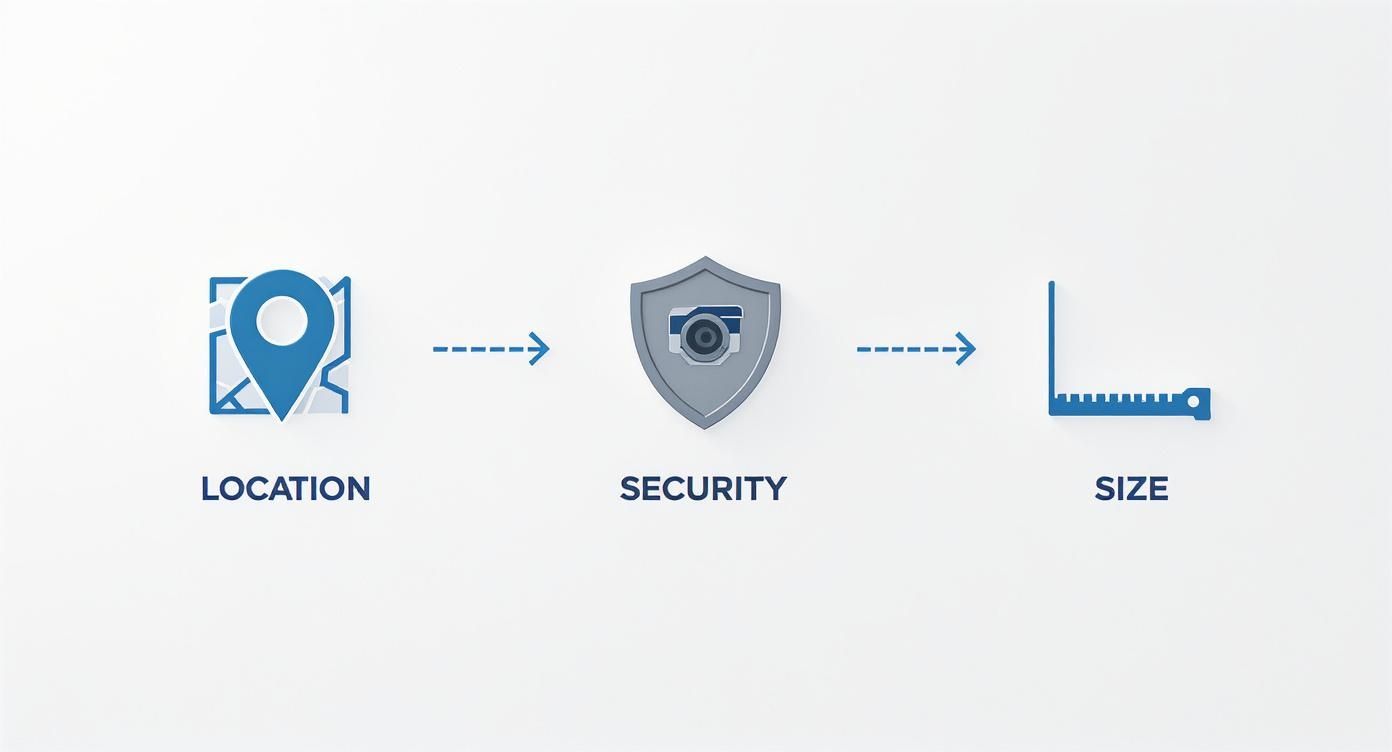
As you can see, a successful storage plan starts with the right facility, balancing convenience, robust security, and the correct unit size for your needs.
Mastering the Art of Boxing and Labelling
The humble cardboard box can be your best friend or your worst enemy. For the best results, always opt for new, high-quality boxes of a similar size. They're much stronger and will stack more safely and easily than a random assortment of used boxes from the supermarket.
To keep your items well-protected for months or even years, you'll need the right supplies.
Essential Packing Materials for Long Term Storage
| Material | Purpose | Pro Tip |
|---|---|---|
| Sturdy Boxes | To contain and protect your items. | Use new, uniform-sized boxes for stable stacking. |
| Packing Tape | To securely seal boxes. | Invest in quality tape; cheap tape can lose its grip over time. |
| Bubble Wrap | For cushioning fragile items. | Use for glassware, electronics, and delicate ornaments. |
| Packing Paper | To fill empty spaces and wrap items. | Less plastic means less risk of trapped moisture. |
| Furniture Covers | To protect against dust and scratches. | Use breathable fabric covers, not sealed plastic. |
| Marker Pens | For clear and bold labelling. | Label boxes on at least two sides for easy identification. |
| Silica Gel Packets | To absorb moisture in sealed containers. | Great for electronics boxes, documents, or clothing containers. |
Having these essentials on hand before you start will make the entire process smoother and more effective.
When you're filling those boxes, always place heavier items at the bottom with lighter things on top. Any empty gaps should be filled with packing paper to prevent your belongings from shifting and breaking. And remember, don't overfill them—you still need to be able to lift them safely!
Clear labelling is a lifesaver. Mark each box on at least two sides with a general summary of its contents and which room it belongs to. This simple act saves you from having to unstack a mountain of boxes just to find one thing. For very specialised items like books, extra care is needed; you can learn more about how to store antique books to keep your collection pristine.
Finally, think about airflow inside the unit. As you stack your belongings, leave small gaps between boxes and away from the walls. This promotes air circulation, which is absolutely vital for preventing damp and mildew from taking hold. For a more detailed walkthrough, our guide on how to pack your storage unit a step-by-step guide covers everything. Following these simple principles will give you complete peace of mind.
Understanding Storage Costs, Contracts, and Insurance
Getting to grips with the financial side of long-term storage is a massive part of making the right choice. Let's break down the numbers, contracts, and insurance policies so you can find the best value and protect your belongings without any nasty surprises. This isn’t just about the monthly payment; it's about understanding the total investment you’re making in your peace of mind.
A solid grasp of the costs, terms, and protection on offer means you can budget properly and sidestep common headaches. When you know what to look for, you can make a confident decision that fits both your needs and your wallet for the long haul.
Breaking Down the Cost of Long-Term Storage
The price you'll pay for a storage unit comes down to a few key things. Understanding them will help you strike the perfect balance between cost and features. The most obvious factor is the unit size; a small 25-square-foot unit will, of course, cost less than a sprawling 150-square-foot space.
Location also plays a big part. Facilities closer to a city centre or in areas with high demand usually have higher rental rates. And finally, premium features like climate control or 24/7 access will add to the monthly bill—but as we've already covered, this is often a very worthwhile investment for protecting sensitive items over many months or years.
To find the best value, you need to think beyond the initial quote.
Many facilities, including our own, offer some great discounts for longer commitments. Paying for six or twelve months upfront can often lead to a lower overall price, sometimes saving you the equivalent of a full month's rent. It's always worth asking about prepayment deals.
Reading the Small Print on Your Rental Agreement
Your storage rental agreement is a legally binding contract, so it’s absolutely vital to read it carefully before you sign anything. This document lays out the rules of the facility and your responsibilities as a tenant. Skimming it could lead to unexpected problems down the road.
Pay close attention to these key clauses:
- Notice Period: Find out how much notice you need to give before you can move out. This is usually somewhere between one week and one month.
- Price Increases: The agreement should clearly state how and when the facility can adjust your monthly rent. Most reputable providers will only implement reasonable, annual increases.
- Prohibited Items: Every facility has a list of things you can’t store for safety and insurance reasons. This always includes flammable materials, perishable food, illegal goods, and live animals.
- Late Payment Fees: Know the consequences of a missed payment, from the fees you'll be charged to the process the facility will follow if you fall behind.
Taking ten minutes to go over these points ensures you're fully aware of your obligations and can avoid any misunderstandings.
Why Your Belongings Need Proper Insurance Cover
Finally, let’s talk about insurance. It’s a common myth that the storage facility is automatically responsible for insuring your possessions. While the facility will have its own insurance for the building and premises, this almost never extends to the contents inside your individual unit.
Many people assume their home insurance will cover items in storage, but that’s rarely the case—or if it does, the cover is often very limited. It is crucial to check your home insurance policy specifically for "goods in storage" clauses. You might find you need to purchase a separate, specialist self-storage insurance policy to be fully protected.
These policies are typically quite affordable, often just a few pounds a month, and give you comprehensive cover against risks like theft, fire, and flood. Without it, you could be left with nothing if the worst were to happen. Ensuring your items are financially protected is the final, vital step in securing complete peace of mind for your long-term storage solution.
What Real Security Means for Your Peace of Mind
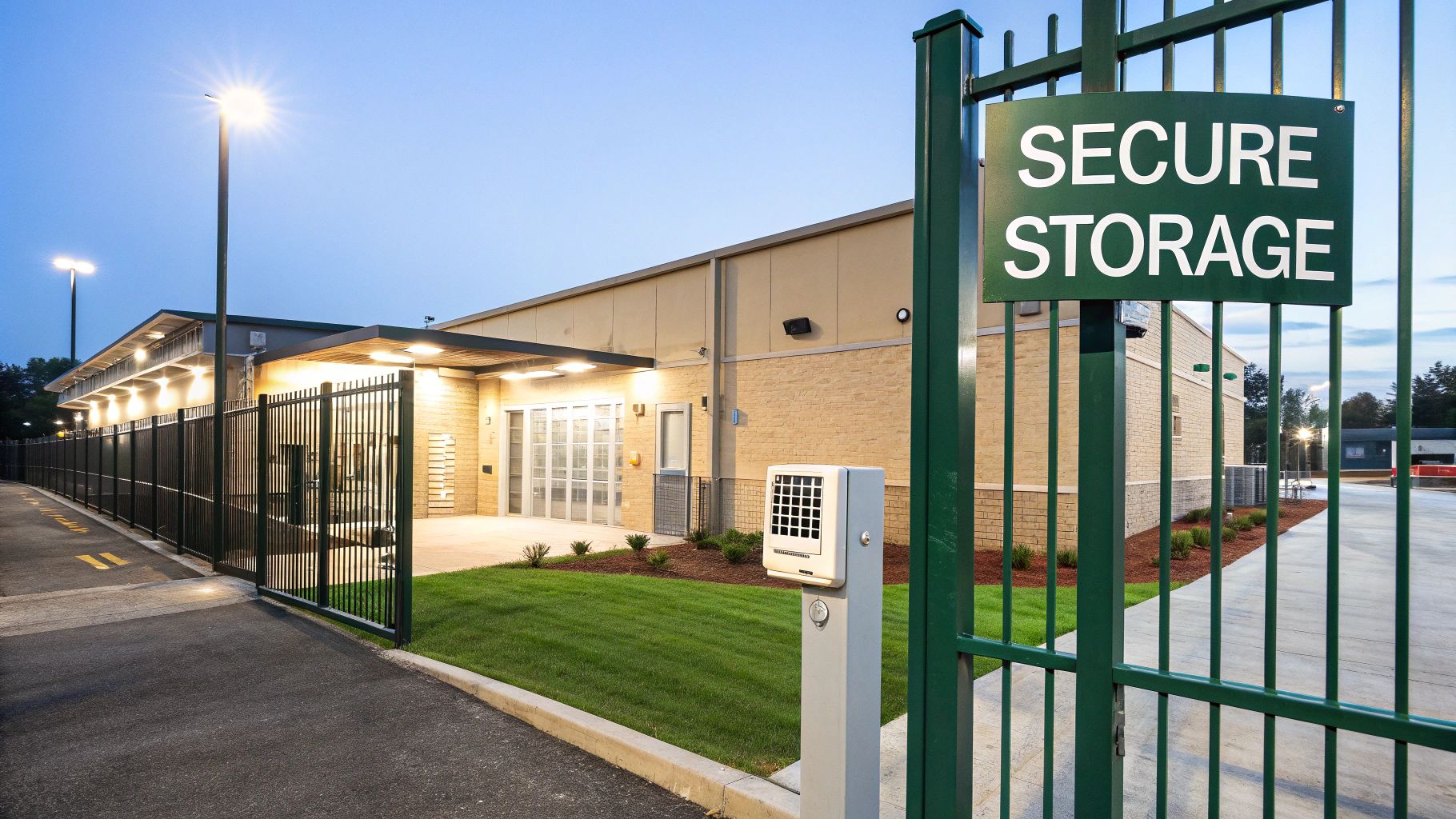
When you're leaving your belongings in long-term storage for months, or even years, you need to know they're safe. But real security is so much more than a strong padlock on the door. To get genuine peace of mind, you need a facility that layers its security, with different systems working together to create a true fortress for your items. It’s not about a single feature, but a complete, well-thought-out defence strategy.
The best UK facilities understand this. Think of it like securing a castle – you wouldn't just rely on a heavy gate. You'd want high walls, lookouts, and guards too. In the world of self-storage, that means combining physical barriers, modern technology, and a human presence to provide all-encompassing protection.
This is what builds trust and lets you walk away with total confidence, knowing your possessions are being watched over around the clock.
The Role of Technology in Modern Storage Security
Technology is the bedrock of any truly secure storage facility today. The most obvious, and one of the most effective, tools is 24/7 CCTV surveillance. Properly placed high-definition cameras covering all the key areas – entrances, exits, and hallways – are a massive deterrent to would-be thieves. They also give a crystal-clear record of everything that happens on-site.
But cameras are just one piece of the puzzle. Just as important is controlled electronic access. This means the entire site is wrapped in secure perimeter fencing, and the only way to get in is through a coded gate. This system ensures only paying customers can enter the grounds, creating a private and much safer environment for everyone.
For an extra layer of protection, some facilities offer individually alarmed units. If someone tries to tamper with your specific unit, an alarm sounds, giving an immediate alert. It’s this combination of technologies that effectively monitors and controls the entire site.
True security is proactive, not reactive. It’s about creating an environment so well-protected that potential issues are stopped before they can even begin, giving you one less thing to worry about.
Why the Human Element Still Matters
As brilliant as technology is, it can't completely replace the value of having people on the ground. The presence of on-site staff during office hours adds a vital human touch to security. A manager who is familiar with the site and the customers is brilliant at spotting anything out of the ordinary and can act on it immediately.
This human element is a powerful deterrent in its own right. A facility with a visible, active management team is a much less attractive target than a completely automated, unstaffed site. Plus, regular patrols and checks of the grounds ensure all is as it should be.
Ultimately, it’s the blend of digital surveillance and human oversight that creates the most robust security system. To see what to look for in your local area, you can explore our guide on finding secure storage near me. This comprehensive approach is a huge reason why long-term storage in the UK is so trusted, with a recent survey revealing that 89% of users are satisfied with the quality of service. That kind of satisfaction comes directly from the reliability and security that top facilities provide.
Got Questions About Long Term Storage? We've Got Answers
Even when you think you've got it all figured out, a few last-minute questions always seem to pop up before you commit to long term storage. That's completely normal. To help you get everything squared away and feel totally confident, we’ve put together some straightforward answers to the questions we hear most often. Think of this as the final checklist to clear up any lingering doubts.
Getting these details sorted now means you won't have any surprises crop up months or even years down the line. From what you can’t pack to whether you should stop by for a visit, let’s get these points ironed out for total peace of mind.
What Items Are Prohibited in Long Term Storage?
For everyone's safety and hygiene, every storage facility in the UK has a list of things you simply can't store. Bringing in prohibited items can put your own belongings, other people's property, and the facility itself at risk. It's always best to double-check your rental agreement, but the list of what's not allowed is pretty standard across the board.
As a general rule, you can't store:
- Perishable Goods: This is a big one. Any food that can go off—fresh fruit, meat, dairy—is a no-go. It attracts pests and, frankly, starts to smell.
- Hazardous or Flammable Materials: Anything that could catch fire is strictly forbidden. This includes things like petrol, paint tins, solvents, gas canisters, fireworks, and even some strong cleaning chemicals.
- Living Things: This one might seem obvious, but it has to be said: no plants or animals can be kept in a storage unit.
- Illegal or Unauthorised Items: You cannot store illegal substances, stolen goods, or firearms (unless you have specific, authorised permission).
We also strongly advise against storing irreplaceable items like original birth certificates, passports, or things with immense sentimental value. While our facility is incredibly secure, those are the kinds of things that are always best kept close to you.
How Often Should I Visit My Storage Unit?
This is a question we get all the time. The simple answer? Not nearly as often as you'd think, especially if you've chosen a quality facility and packed everything properly. In a secure, climate-controlled unit, your belongings are perfectly happy to be left alone for a long, long time. After all, the whole point of long term storage is that it's a "set it and forget it" solution.
That said, popping in for a quick visit every few months can be great for your own peace of mind. It’s a chance to see that everything is exactly as you left it and just confirm there are no issues. It's definitely not a requirement, but it can be very reassuring.
With today's security and climate control, your items are safe and sound for a year or even longer without a visit. An occasional check-in is really more for your benefit than for the safety of your belongings.
Having easy, 24/7 access makes this even simpler. The freedom to stop by whenever you fancy means you can have a quick look around without it feeling like a major event, giving you that extra layer of assurance.
Can I Get a Discount for Paying in Advance?
Yes, you certainly can! In fact, this is one of the smartest ways to bring down the overall cost of your long term storage. Most facilities are more than happy to offer a healthy discount to customers who are ready to commit and pay for a longer term upfront. It gives the facility predictable income, and it rewards you for your loyalty.
Always have a chat with the facility manager about prepayment deals. You’ll often find offers like:
- Getting one or two months free when you pay for a full year.
- A percentage discount, like 10-15% off the total, for paying for six months in advance.
If you’re sure you’ll need the unit for six months, a year, or more, these deals can save you a significant amount of money. It turns a monthly bill into a single, discounted payment that’s often much easier to budget for. Never be shy about asking for the best possible rate for the time you need.
Is Climate Control Really Necessary?
For any storage period longer than a couple of months, particularly with the UK's unpredictable weather, the answer is a firm yes. Climate control isn't just a fancy add-on; it's essential protection for anything valuable or sensitive. A standard unit is basically a metal box, and that leaves its contents exposed to wild swings in temperature and humidity.
Over time, that exposure can cause real damage:
- Wood Furniture: Can warp, crack, or even split.
- Fabrics and Upholstery: Become a prime target for mould and mildew.
- Electronics: Delicate internal parts can corrode and fail.
- Documents and Photos: Can get damp, stick together, or fade beyond recognition.
A climate-controlled unit keeps the environment stable, acting like a protective bubble against these threats. The small extra monthly cost is a very smart investment when you weigh it against the price of repairing or replacing your damaged possessions. It is the single best way to make sure everything comes out of storage in the exact same condition it went in.
Ready to secure your belongings with a trusted, family-run provider? At MG Self Storage, we offer secure, accessible, and affordable long term storage solutions tailored to your needs.